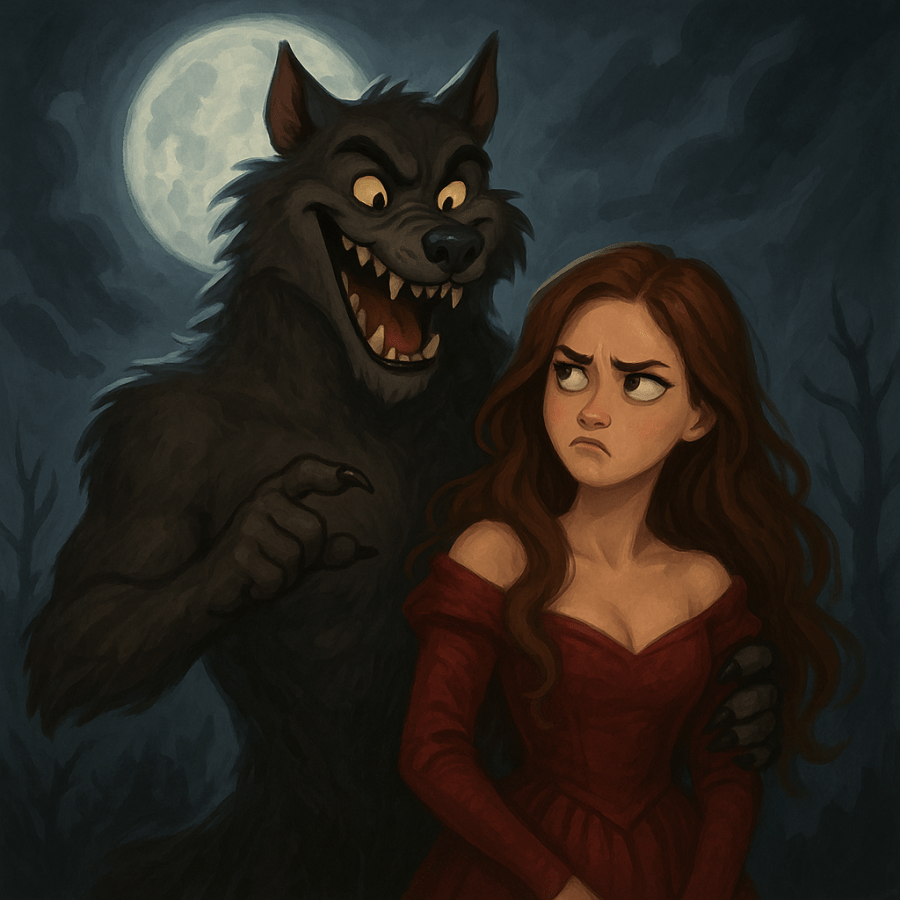
Same Pack, Same Plot: The Werewolf Serial Mill

After taking a flamethrower to the CEO bullies and substitute brides last week, it was only a matter of time before I stumbled across another cookie-cutter genre clogging up the fiction arteries.

Enter: the werewolf serial.

You’ve seen them. They haunt the top 10 on apps like Dreame, GoodNovel, Webnovel, and Hinovel. You know the ones—different Alpha, different pack, but always the same recycled wolf cry. I’ve read enough by now to start howling at the moon in protest.

And the worst part? You don’t even have to download the apps to see the carnage. The most egregious offenders are plastered all over piracy sites—exact same structure, different fursuit.


The Template Behind the Wolfskin

Let’s be honest. Most of these “serials” are just paint-by-numbers dramas wrapped in matted fur and dominance tropes. Here’s the basic script:

  • Rejected Mate – Public rejection. “I, Alpha Douchecanoe, reject you as my mate.” Girl cries. Audience clicks.
  • Exile and Humiliation – She’s beaten, banished, humiliated or locked in a dungeon because rejection alone doesn’t sell enough chapters.
  • Hidden Destiny – Surprise! She’s the Moon Goddess’ chosen one / royalty / glowing-eyed murder machine.
  • Second-Chance Mate – Enter hotter, richer, more Alpha Alpha. Usually a Lycan King. He wants her. Bad.
  • Grovel Arc – Original mate begs for a second chance, but oops! Too late.

All you have to do is swap out the “Silver Moon Pack” for “Bloodfang Ridge,” rename Lily to Ava, and bam—you’ve got a “new” book ready to launch on five platforms and twelve pirate aggregators.


Exhibit A: Alpha’s Rejected Mate

Straight from GoodNovel:

“I…reject you as my mate and Luna.”

Riveting stuff. Our girl is tossed aside, only to later awaken a hidden power and come roaring back when the pack is in peril. Sound familiar? Because it is. That plot’s been reprinted so many times it should come with a carbon copy warning [1].


Exhibit B: The Lycan King Rescue

On AlphaNovel, Rejected Mate: The Lycan’s King’s Claim opens with the heroine being beaten and locked in a dungeon by her “true” mate. But then comes the royal-level upgrade: a brooding, god-tier Lycan King who swoops in to claim her as his one and only.

Same tropes, different title, rinse and repeat. And yes, the same “plot” shows up on Hinovel in Mated to the Alpha King After Rejected—this time, she’s politically cast aside before being rescued and “recognized” by a more powerful Alpha. Like Pokémon, but with more trauma [2][3].


Welcome to the Assembly Line

According to an investigative piece from Rest of World, platforms like Dreame and GoodNovel actively commission these template-based tales. Editors hand out outlines that are sometimes plagiarized from earlier hits, and pay-per-chapter contracts mean authors are rewarded for volume, not quality. Think of it as the Wattpad Hunger Games—if Wattpad had a sweatshop [4].

The real kicker? Many of these formula plots come directly from Chinese webnovel factory culture, where serialized “dog-blood” melodrama has been streamlined into a high-octane industry. What used to be “CEO’s Secret Twins” is now “Alpha’s Hidden Luna.” Billionaires in suits have grown fur and fangs, but the stories are still stamped from the same mold.


Why It Matters

Look. I’m not anti-shifter. I’ve read and loved some incredible werewolf novels where the fated-mate trope is used to explore trauma, identity, and consent—actual themes with emotional weight.

But what’s happening here isn’t storytelling. It’s a content churn machine wrapped in wolfskin, regurgitating the same plot beats with a side of trauma-for-clicks.

These serials don’t just repeat—they glorify. They normalize spousal abuse, fetishize coercion, and blur lines around consent so thoroughly that non-consensual sex is often framed as destiny. “Fated” doesn’t mean forced, and “mate bond” should never be shorthand for Stockholm syndrome.

We deserve better than glorified assault parading as romance. Writers deserve better than burnout-inducing contracts built on trauma bait. And readers—especially young ones—deserve stories that matter, not just serials that breed across piracy sites like caffeinated tribbles with zero ethical oversight.


References

  1. GoodNovel – SILVER WOLF: Alpha’s Rejected Mate.
  2. AlphaNovel – Rejected Mate: The Lycan’s King’s Claim.
  3. Hinovel – Mated to the Alpha King After Rejected.
  4. Rest of World – “China’s romance app factories are now global” (2022).

Fast-Food Fiction: When Every Story Starts Tasting the Same

Lately, I’ve been staring at Kindle Unlimited and TikTok “dark romance” recommendations and wondering why they all feel like reheated leftovers. Billionaire bullies, Cinderella knockoffs, revenge plots so contrived they could have been storyboarded by soap opera villains.

I finally figured it out. These aren’t “Western” stories at all. They’re borrowed—stolen, in some cases—straight out of Asian entertainment.


The Imported Tropes

  • Dark Forced-Love Lakorns: Thai soap operas (lakorns) thrive on the “hate until love” cycle. If you’ve read a forced-marriage-turned-soulmate plot recently, chances are it traces back here.
  • Dog-Blood Revenge Arcs: Chinese dramas (狗血剧, literally “dog blood shows”) specialize in melodrama so absurd it borders on parody: contract marriages, secret babies, years-long separations, shocking betrayals, and tear-drenched revenge.
  • Cinderella on Steroids: Korean chaebol romances gave us the poor-girl-meets-billionaire-heir blueprint. Swap out Seoul for Seattle, kimchi for coffee, and presto—a “new” Kindle romance.
  • Abusive Bullies as Love Interests: Webtoons and certain K-dramas popularized the idea that toxic bad boys can be redeemed if the heroine suffers long enough.

Sites like Dreame, Radish, and Joyread buy up translations of these serialized stories—or simply retitle them—and flood English-speaking markets [1]. Indie authors pick them up, rebrand them with new names and locations, and market them as “what readers want.”


Exhibit A: When Her “Death” Couldn’t Break Him

This pay-per-chapter English serial has run to over a thousand chapters across multiple apps under shifting titles (When Her “Death” Couldn’t Break Him, A Doll Wife’s Farewell to Her Torturing Marriage, Dear Ex-Wife, Back My Son) [2]. Readers have traced it back to the finished Chinese webnovel 《有孕出逃:千亿总裁追妻成狂》, which ran to 2,312 chapters before completion in March 2024 [3].

The bones of the story are identical:

Chinese Original

  • Deaf/“unwanted” wife trapped in a loveless marriage.
  • Husband’s “white-moonlight” ex returns, escalating abuse and humiliation.
  • Heroine moves to leave/divorce; husband blocks her (“you want to leave, only over my dead body”).
  • Long cycles of punishment, separation, child plotline, obsessive pursuit [3].

English Serial

  • Heroine erased in a cold marriage.
  • Rival women + family manipulation.
  • “She’s dead—no she isn’t” fake-death/urn reveal arc.
  • Child named Elliot.
  • Grovel and obsession stretched over 1,000+ chapters [2].

Different names, same beats. Yet nowhere on the English serials is there acknowledgment of the Chinese source.


Exhibit B: The “Substitute Bride” Pipeline

Another glaring example: the “substitute bride to the crippled billionaire” trope. On English apps like Webnovel, you’ll find multiple serialized novels with near-identical titles and plots [4][5]:

  • The heroine is forced to marry a “crippled” or disfigured CEO in place of her sister.
  • Everyone mocks her sacrifice—until the “crippled” husband reveals his hidden power, money, or secret health.
  • Cue humiliation, groveling, and a Cinderella-to-queen reversal.

This formula isn’t new. It comes directly from Chinese webnovel genres labeled 替嫁 (substitute bride) and 残疾总裁 (disabled CEO)—and the Western serials are nothing more than renamed copies [4][5].


Why It Matters

This isn’t romance. It’s trauma exploitation, endlessly repackaged. And when readers say, “I just want something different,” they aren’t wrong—what they’re being fed is the same reheated script over and over again.

It’s not that tropes are inherently bad—every culture has melodrama. The problem is when a handful of fast-food publishers flood the market with stolen, reskinned versions of the same story. It isn’t homage. It isn’t even lazy. It’s theft. And it cheapens the entire act of writing.

We talk constantly about AI as the bogeyman that will kill literature, but while everyone is panicking about machines, they’re ignoring a much uglier truth: this plagiarism-driven serialization trend is already strangling original storycraft.

What about the writers who spent decades learning the craft? Who built intricate plots and subplots, interwove subtext and theme, and learned how to land every beat for maximum emotional payoff? That work takes time, discipline, and mastery. And it matters.

By contrast, these stolen serials—let’s be honest, cereals—are nothing but sugary filler. Sloppy. Lazy. Rushed out in identical boxes with only the cartoon mascot swapped. And readers deserve better.

For the same money people spend chasing the next installment of a copy-pasted revenge fantasy, they could buy a well-crafted, well-edited novel from an author who actually bothered to learn their art.

That’s who I’m writing for—the readers who don’t want to settle for reheated leftovers and call it a feast. The ones hungry for something real, something worth savoring.


References

[1] Dreame, Radish, Joyread listings – English-language serial platforms known for distributing translated/retitled Chinese/Korean romance fiction.

[2] Joyread – When Her “Death” Couldn’t Break Him (and variant titles), serialized novel pages.

[3] Fanqie/Qimao – 《有孕出逃:千亿总裁追妻成狂》, 2,312 chapters, completed March 18, 2024.

[4] Webnovel – The Substitute Bride Doted by My Billionaire Husband.

[5] Webnovel – The Substitute Bride and the Crippled Billionaire.


How Do I Find My Audience Through the Noise?

Lately, I’ve been asking myself a hard question: How am I supposed to find my readers in all this noise?

Because everywhere I turn, I see formula-driven tropes dominating the shelves. Reverse harems. Revenge-mate melodramas. Dark romances that read more like Lifetime movies with fangs than lived-in stories about human resilience.

And layered on top of that is AI — engines that can spit out endless variations on the same tropes, reshuffling familiar beats faster than a slot machine. A new “book” can appear overnight, not because a writer wrestled with it, but because someone told a program: give me more of what’s already selling.

So here I am. Fifty years of studying story structure, mastering craft, learning how to carve arcs that breathe and bleed — and I feel drowned out. Not because my stories don’t matter, but because they don’t slot neatly into what algorithms reward and pirates steal.

And that’s the gut punch: finding my work, my blood-on-the-page work, on piracy sites. Watching it spread for free while sales struggle. Being told it’s “a compliment.” No — it’s not. It’s theft. It’s being hollowed out from both ends: formula flooding the market, piracy draining the reward.

I don’t write candy-bar melodrama. I write meals — layered, messy, complicated stories where scars don’t vanish in the epilogue, where healing is jagged, where love is forged not in spectacle but in fire and choice.

But how do I put that kind of work in front of readers when the loudest voices are built on repetition, not resonance?

How does craft compete with the slot machine?

I don’t have a neat answer. Maybe there isn’t one. Maybe the point isn’t to compete, but to keep carving the kind of stories that last after the sugar high fades. Maybe the question isn’t whether I can be louder than the noise, but whether I can still find the readers who want more than noise.

That’s where I am tonight: tired, questioning, but still holding the ember of a truth I can’t let go of.

Because if I’ve learned anything in fifty years of storytelling, it’s this: the fads burn hot and fast, but the stories that matter — the ones that linger — are always the ones written from scars, not formulas.

Why I Self-Publish

“What do you do?”
“I’m an author.”
“Oh? Who is your publisher?”
“I am.”


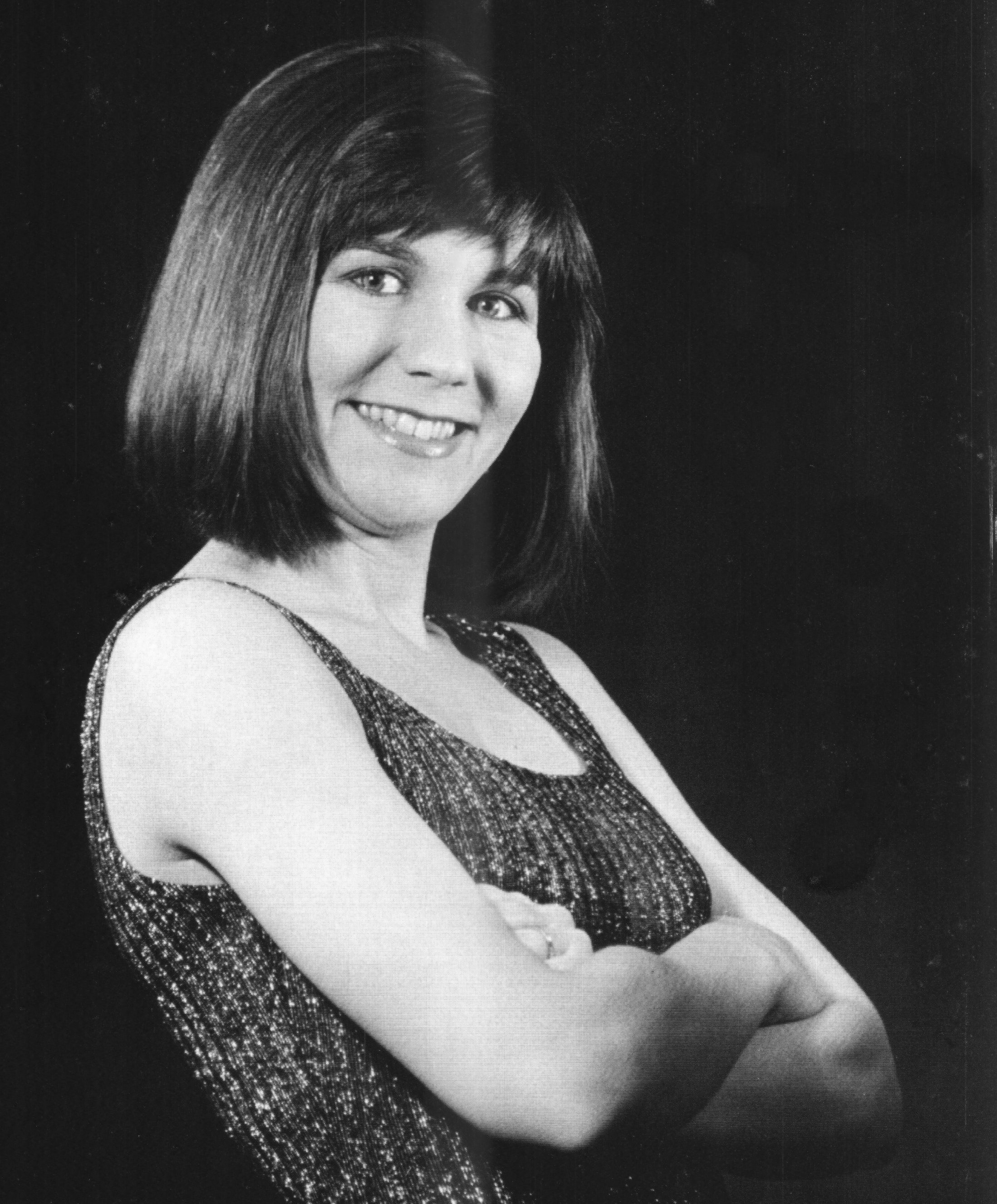
Promo 1991
1991 – While everyone else’s promo pics at the time came from Glamour Shots, I set up a photo shoot with a real photographer.

I wrestled long and hard with myself about going the self-publishing route. I’ve been in the business a long time (since 1987) and it was hard for me to get past the self-pubbed stigma. Personally, I couldn’t shake the reminder of “Vanity Press” publishers that were the bane of the writer’s existence back in the day.

For the low cost of around $3,000 way back when, you could send your manuscript to a publisher (printer really) who would slap a lame cover on and send you back a slick-looking, but completely amateur product. There was a certain type of person who did that. They were considered by the reputably published as no-talent, wannabe hacks who couldn’t get published any other way.

Vanity press publishing was the kiss of death to any hope of having a “REAL” writer’s career. If you mentioned in a cover letter to a publisher that you’d self-published previously, I’m pretty sure they would laugh cruelly and toss your submission — unread — into the return pile, if not the circular file, depending on whether you’d included a return SASE, (that’s Self-Addressed, Stamped Envelope for you whipper-snappers.)

It was a brutal industry with high and demanding standards. I got out of the publishing industry in 1999 and threw myself headlong into my television career out of financial necessity. I knew I could rely on a steady paycheck in television. Freelance writing can be an iffy proposition, especially when you’d rather devote your full attention to fiction and not articles about dogs, apartment living, and dating. So I only wrote to supplement my paycheck on occasion.

In the time I was out of publishing, Amazon rose from a novelty online bookseller to the mega-giant of publishing that it is today.

“E-books will never take off,” I said. “They’re a passing fad. People who read love physical books, not to mention the screens are hard on the eyes.”

I’ve never been good with investments either. Self-publishing surged and I resisted. Several friends encouraged me to look into it. I used to brag that I’d been rejected by some of the finest publishing houses in the industry, which is true. Del Rey, Avon, Tor, Ballantine have all rejected my early manuscripts. (Re-reading them now, I can’t blame them.) I stubbornly clung to my old-school ways. Self-published means you’re not a “REAL” writer and you can’t get published any other way.

Ten years rolled on. I was content to remain in retirement from publishing. I’d married and was raising a family at long last. Promo PicOne day, a friend emailed me one of those fun chain letters in which the sender has answered a bunch of questions and spammed their friends with them and now it’s your turn to replace their answers with your own and spam your own friends. One of her answers lit a spark inside me.

“I wish I could meet Darien Roarke for the first time all over again…”

Outside of my local RWA chapter and the slush pile readers, only a precious handful of friends had ever read any of my fiction. She was my biggest and most devoted fan. I had a manuscript she hadn’t read, so I sent it to her. I hadn’t touched it in ten years. She gave me the kick in the butt I needed, and I started rewriting with an eye towards publishing once again.

I looked into e-publishers and small houses figuring I’d be most likely to find acceptance there. Angela James of Harlequin’s Carina Press put out a submission call, so I put my rewrites aside and took the backstory notes and knocked out a novella to send to her. I never sent it. During the process of writing, I did a lot of research into small press e-publishers, and finally, into self-publishing itself. What I learned changed my perspective completely.

Ultimately, I chose to self-publish the novella which became SOVRAN’S PAWN because:

  • BWC SOVRAN'S PAWN - FINALIt offered me more creative control over my brand,
  • I wouldn’t feel pressured to compromise my core values to satisfy a publisher
  • Looking at the smaller publishers from a publisher’s perspective (I edited and published a lifestyle magazine in my youth) I knew that if my sales didn’t meet their expectations, I could be dropped like a hot rock. Nothing personal, it is the ONLY way they could make their numbers work. High turnover is the only way to quickly build a back catalog and visible presence among customers. Keep what sells well and drop what doesn’t pay the bills. Never mind the fact the burden for marketing and networking was squarely on the author’s shoulders and not the publisher’s. I also knew that no publisher would believe in my series as much as I did, and wouldn’t feel as driven to market it. And lastly,
  • The quality of editing in far too many of the smaller press e-books that I was reading would NEVER have made it over the transom let alone out the door back in the day. Having aspired to being published by the lofty, “big” houses with their exacting standards, I wouldn’t allow my name to be associated with a publisher who turned out less than quality work. If there are editing errors in my books, they are solely MY responsibility, but I can promise my readers that I have done everything possible to turn out the best quality product it is within my ability to produce. I couldn’t guarantee the same from some of the smaller e-publishers whose books I was reading.

If I hadn’t had so much experience in the industry already under my belt, I may not have opted to go the self-publishing route. As it was, I knew what was involved before I started. I had done the writing, editing, layout, design, art, and marketing before. I couldn’t see where a small press or digital first publisher could do anything for me that I couldn’t do for myself. I knew that I could turn out a product that was at least as good as any digital first publisher, if not better than most.

I’m old school. Quality and integrity are of paramount importance. I want readers to know that if they pick up a book with JC Cassels’ name on it, I am providing them with the best book it is within my power to produce, technically as well as creatively. Smaller press e-publishers couldn’t guarantee that, not from the quality of products that I’ve seen out there.

FloppyDiskFor me, the biggest learning curve was unlearning everything I knew about traditional publishing. It’s not the same industry it was back in the late 80’s. On one hand, that’s good for authors who write outside the mainstream. On the other, the ease of self-publishing has relegated some damn fine authors to a different kind of slush pile in which they vie for readers rather than publishing contracts.

Ultimately, I believe a quality product will find its niche in the marketplace. The current environment means authors, self-pubbed or otherwise, just have to work harder to get the attention of readers slogging through the virtual slush pile on Amazon. This means to succeed, you can’t skimp on editing or packaging. The longer you can hang in there, and the more quality books you can get OUT in front of readers, the more likely you are to survive, self-pubbed or otherwise.

So when I’m asked who my publisher is, and I answer that I am my own publisher, I do so proudly. I bring nearly thirty years experience in the publishing industry, several awards for excellence in writing and editing, and a reputation for high standards and a quality product. It doesn’t get more professional or reputable than that. Arcana Double Cross Cover2

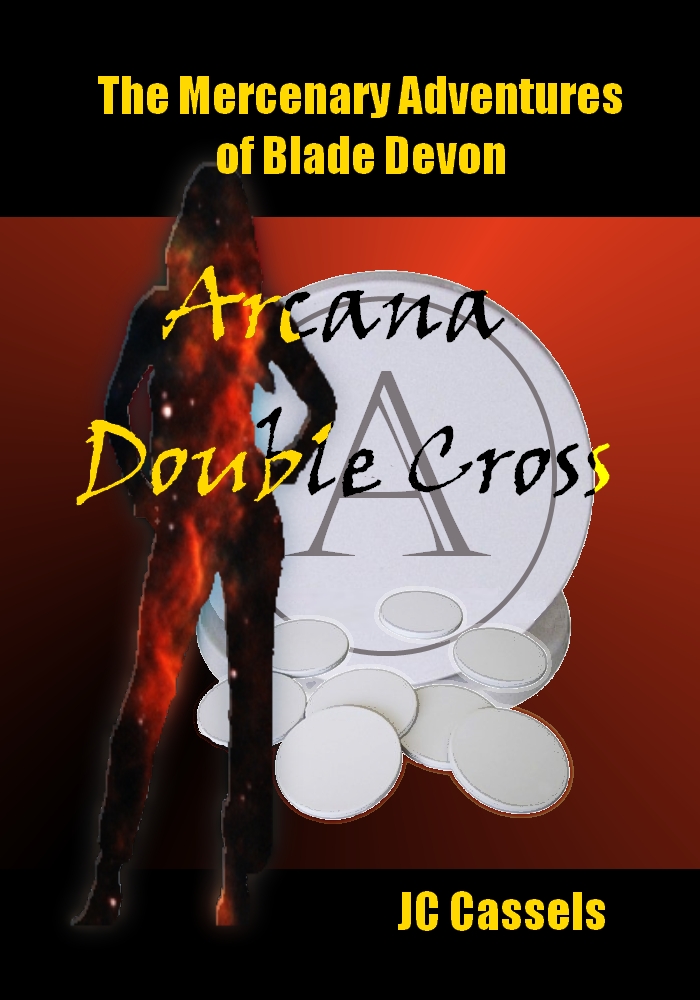
Oh, and as for my friend, the book she was referring to in her email is ARCANA DOUBLE CROSS in which I introduced Darien Roarke as the gambling alias of the one and only Blade Devon. It is a much darker, grittier story and more of a “James Bond in space” than a romantic adventure. As for the manuscript I sent her to read, the backstory notes for that became SOVRAN’S PAWN and HERO’S END.  The “new” manuscript I sent to her is still being rewritten and will be released under the title it has always had:  BARRON’S LAST STAND.

Confessions of a Dictionary Snob

IMG_0243I have a confession.

I am a dictionary hoarder snob addict aficionado.

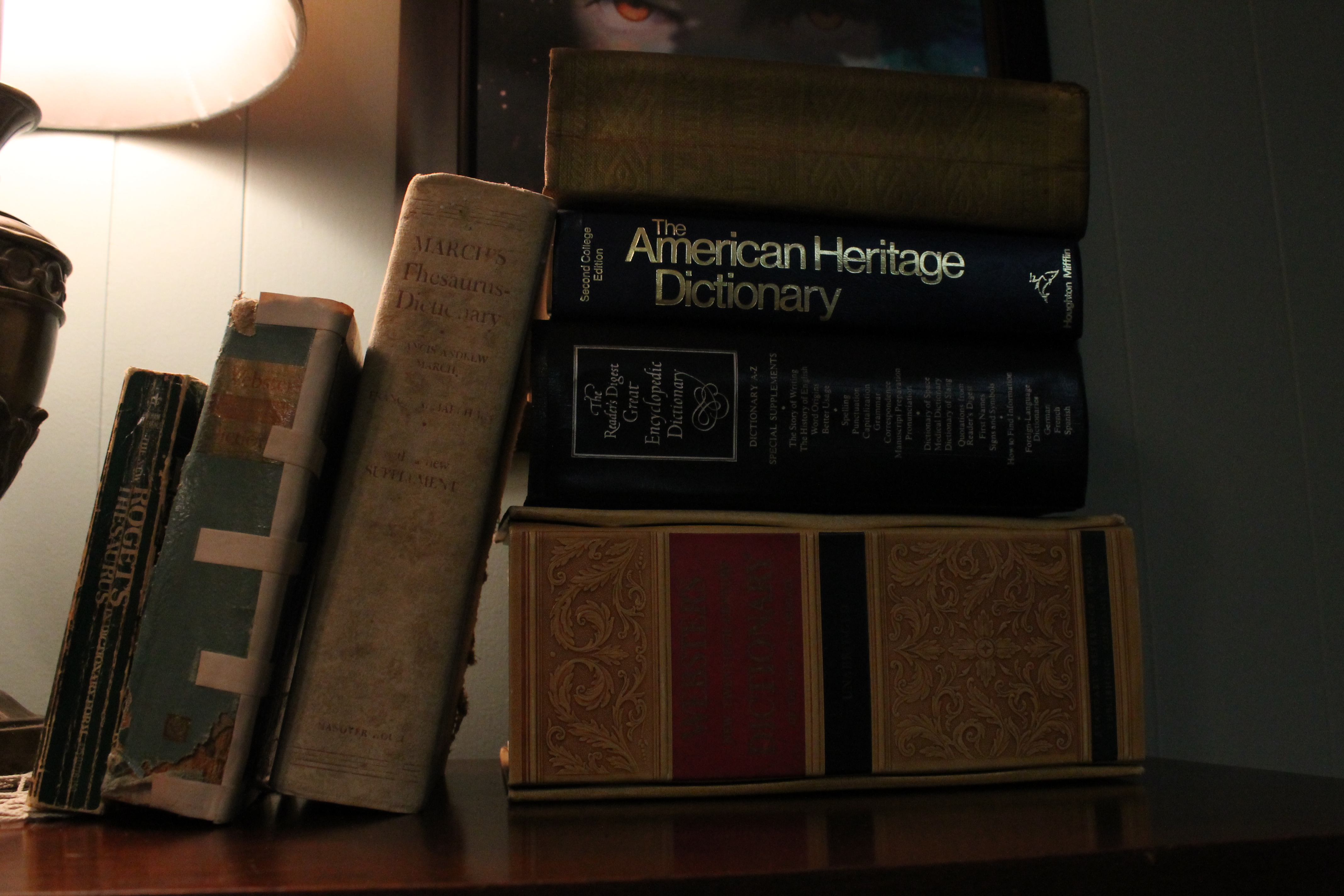
From an early age, I’ve enjoyed reading the dictionary. It’s amazing the words you learn doing that! I’m old school. When I wanted to know what a word meant, I had to hit a musty book with faded, yellow pages that crackled when you thumbed through them. You don’t get quite the same thing from Googling a word for its definition.

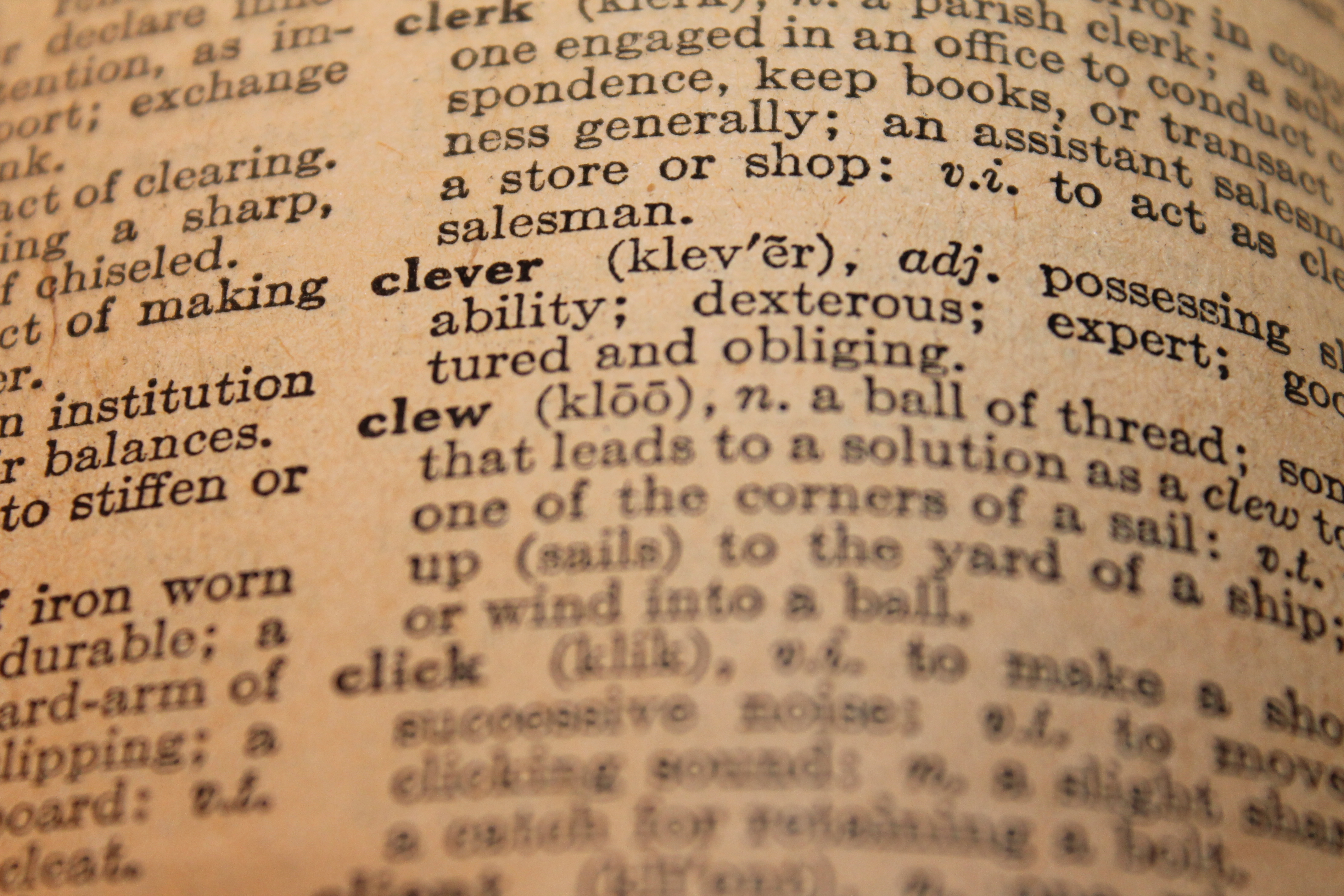
IMG_0259While looking for the proper spelling or meaning of one word, you’re more likely to stumble across something interesting that you may not have known. A lot of people don’t realize that language is always evolving. Words fall in and out of fashion and spellings change over time as common use dictates. I feel confident that someday, the proper spelling of the word “definitely” will devolve into “definately.” Just as the word “clew” became “clue,” a fact I did not know until I found it in a very old dictionary that my mother used in her 1940’s era elementary school days.

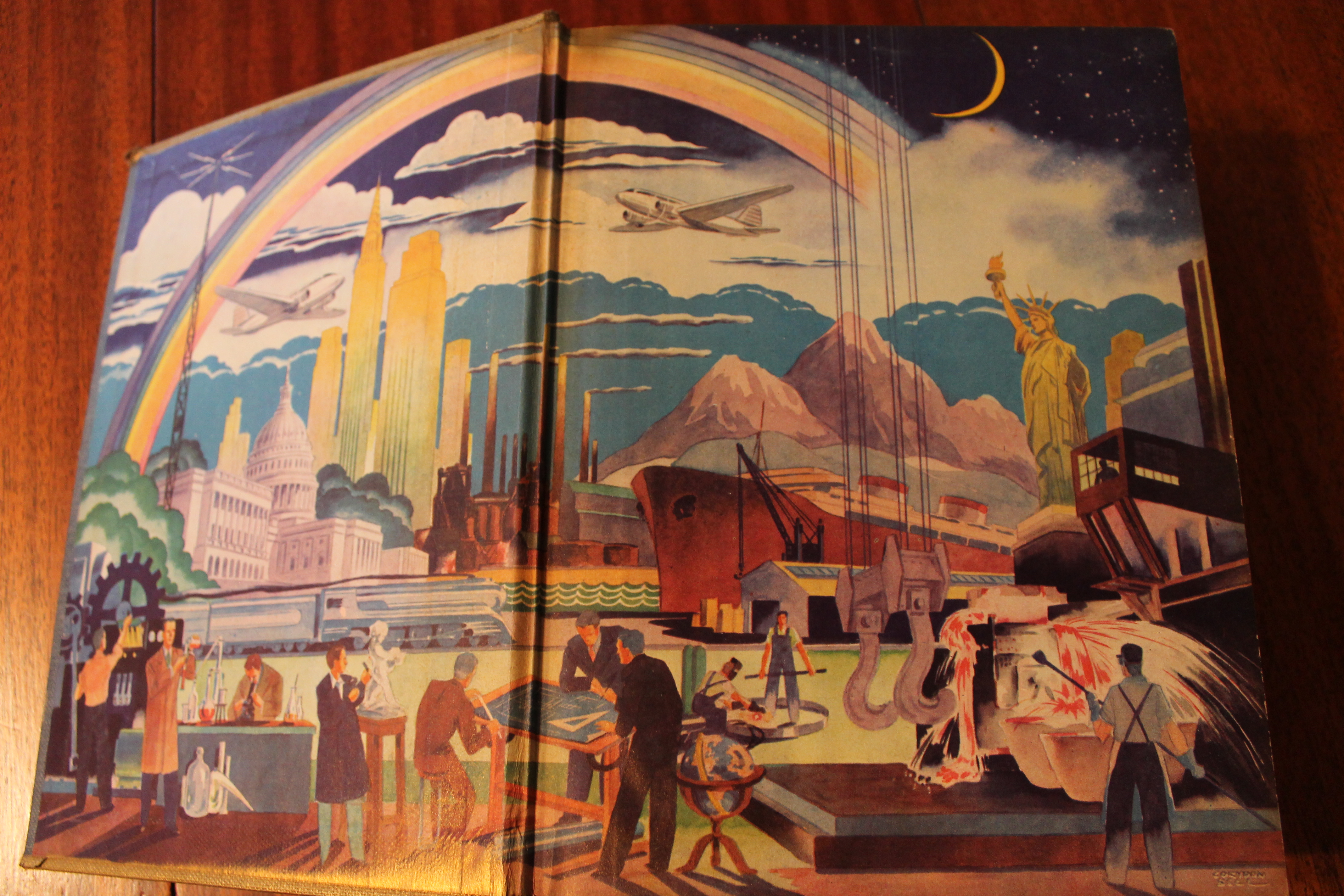
My aunt loved elegantly bound tomes and filled her home with them…after she spray painted them gold.

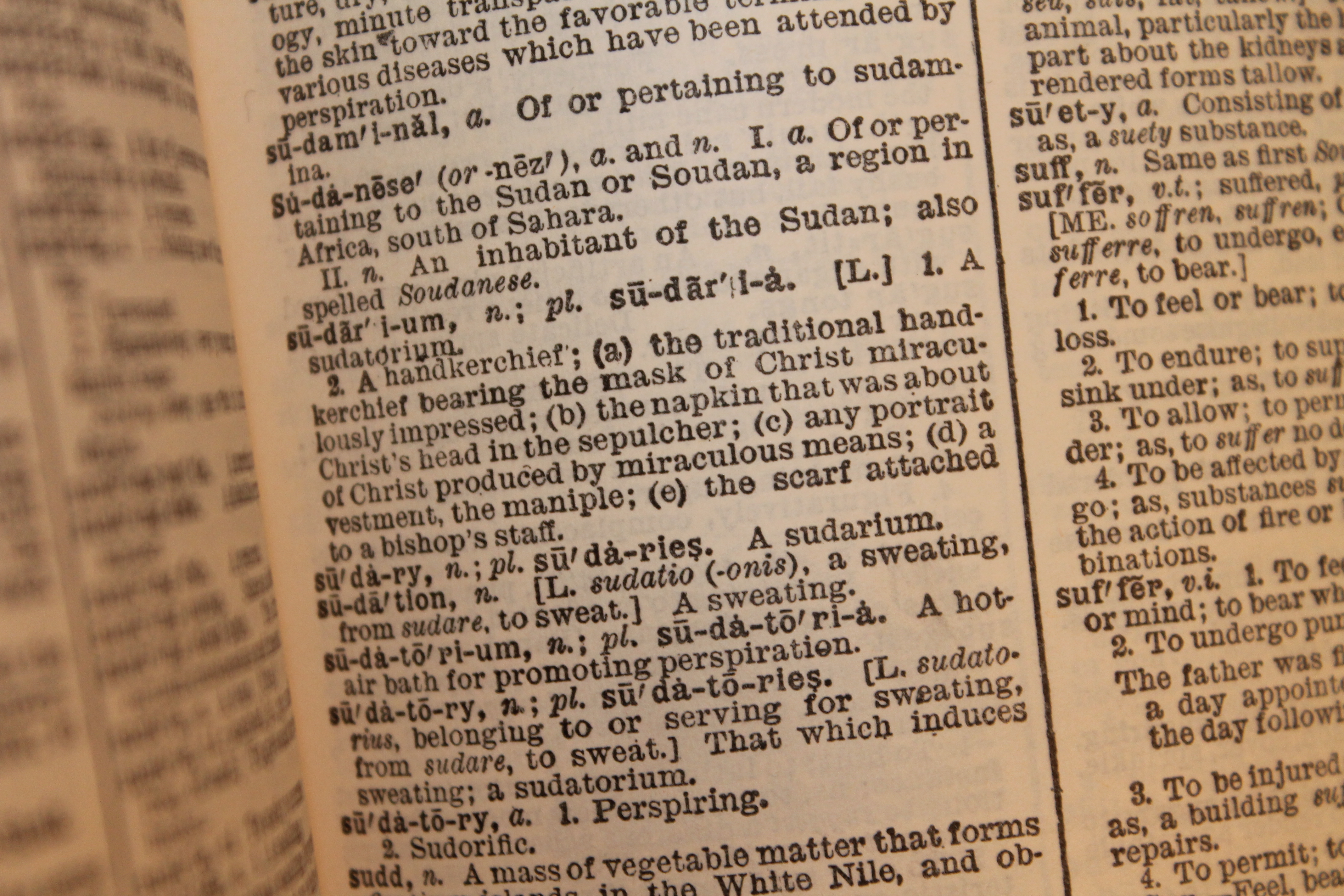
When she asked me what I’d most like her to leave me in her will, I wanted her dictionaries. She had several, they were all very thick, and quite comprehensive. While reading through one such book looking for a synonym of “handkerchief,” I stumbled across the word I now use to test dictionaries. I do not consider a dictionary complete unless it contains this word.

Seriously? What kind of geek has a word specifically to test dictionaries for completeness?

Ummm…a Writer…a Word Merchant.

IMG_0250Words are my stock in trade. My dictionaries are my warehouses. My thesaurus is my chop shop. The Chicago Manual of Style is my bible. These are the tools I use to do my job. It’s important vital that I have the best tools I can find at my disposal. The dictionaries I’ve found that have my word in it generally cost upwards from $100. If I’m looking for a word that I know is used in the English language, in the context I’m pretty sure it needs to be used, and I can’t find it in a dictionary, and that dictionary doesn’t have my test word in it, my default position is that I am right about the word’s meaning and/or usage because the dictionary in question is incomplete.

Back in my newspaper days, I once argued with an editor over the use of the word “scurvy” as an adjective. Her argument was that it was a noun, which it is. Mine was in favor of its use as a descriptor. Her fallacious argument was based on the stand that it wasn’t listed as such in her $5.99 grocery store paperback rack dictionary as an adjective. Mine was based on the fact that I’d cross-referenced it through five dictionaries, published between 1830 and 1990, none less than three inches thick, and each containing my test word. Needless to say, I got to keep scurvy as an adjective, and I got promoted to copy editor.

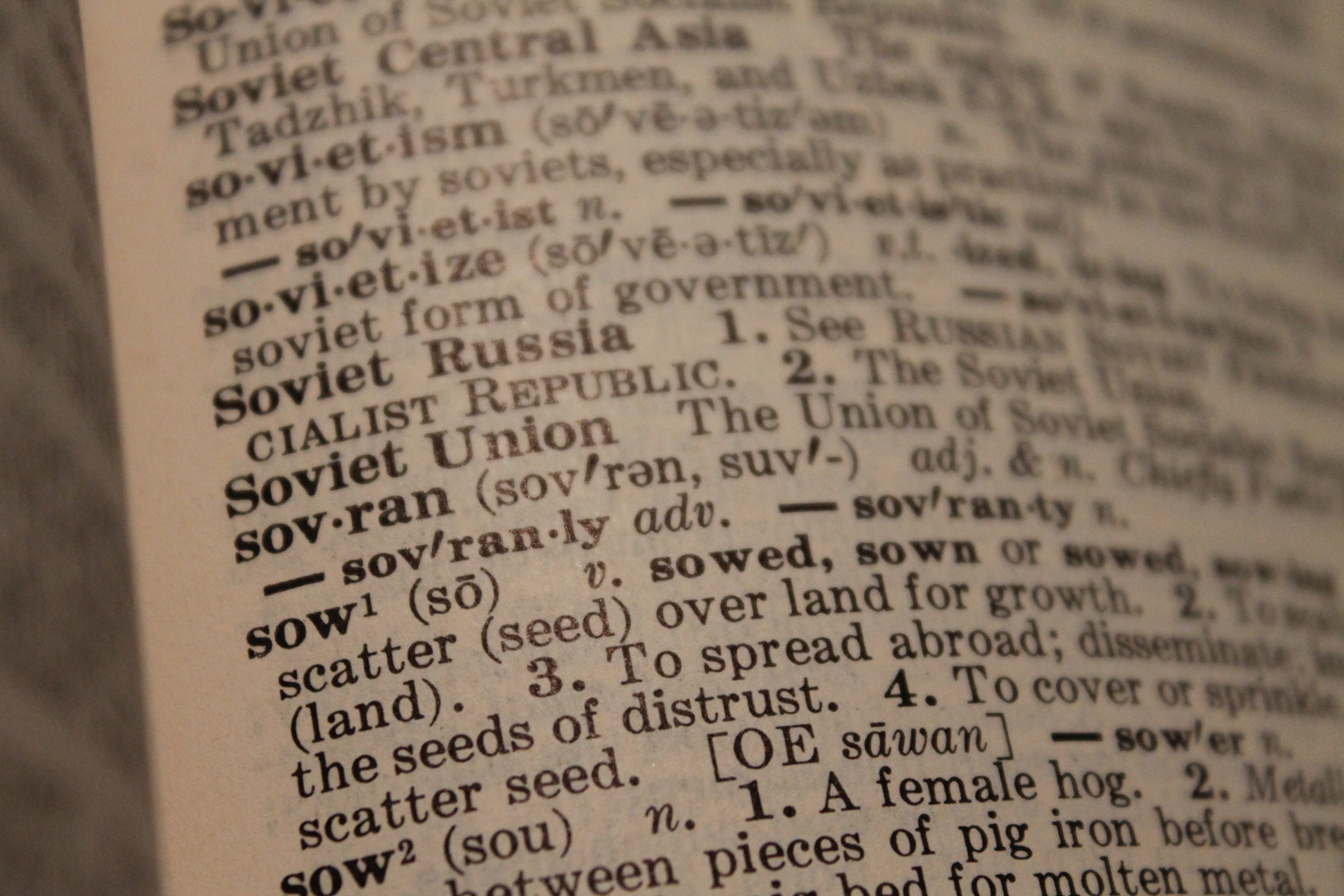
IMG_0262What’s my test word? Sudarium. What does it mean? Sweat rag. I suppose the argument could be made that it’s a Latin word that dates back to the days of the Roman baths when people used to go to sudatoria (saunas) and use a sudarium to wipe away perspiration. You know that workout towel you take to the gym to wipe down the equipment and your face when you’re finished? Technically, it’s a sudarium, not a towel. This word is so obscure that it’s freaking out the spell check on Word right now. Every time I write sudarium I get the little squiggly red line under it, warning me that I’ve entered a word that doesn’t exist. Wanna bet? My dictionary right here says it’s not only a word, but I’ve spelled it correctly. 😛

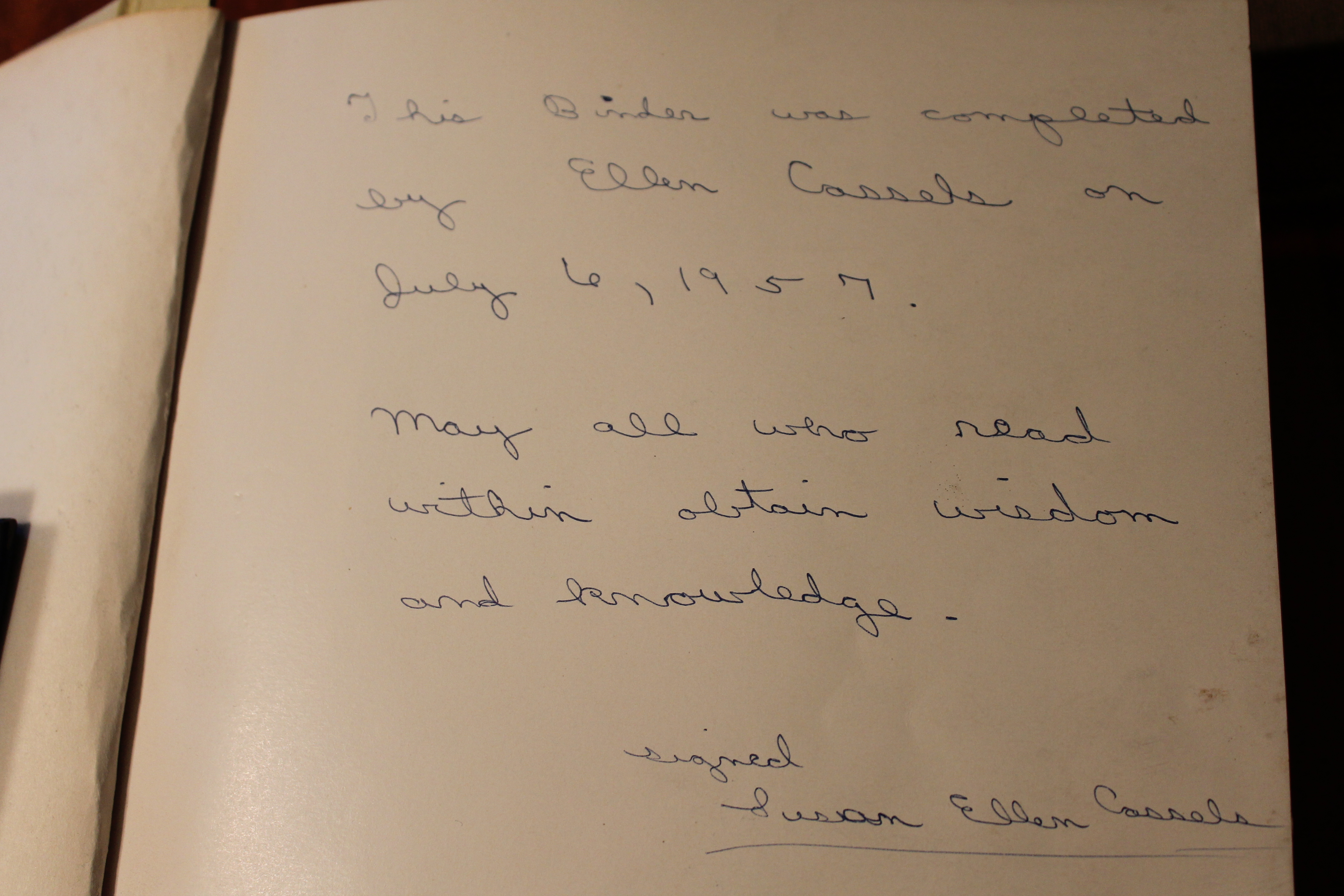
IMG_0257My love for dictionaries runs in the family. Another aunt painstakingly compiled the dictionary you see in the picture. In the 1950’s, the grocery store gave away a comprehensive dictionary, one section at a time. Then a teenager, Ellen (my dad’s little sister) diligently gathered the binder and each section. At six inches thick, it is the most comprehensive dictionary of my collection and my favorite.

Other favorites include the three-inch-thick American Heritage dictionary my great-aunt-of-the-gold-spray-paint gave me for my high school graduation, the three-inch-thick dictionary I first found my test word in, and three or four gold-painted dictionaries printed before 1940. I have several more, including pocket dictionaries, drugstore paperback rack dictionaries and a few unexceptional tomes that well-intentioned friends and family gifted me with over the years.

That’s kind of like giving Eric Clapton a plastic ukulele from the Walmart toy department. Sweet and funny, but pretty much useless.

My husband also has a few, but after he produced them and I laughed scornfully, he took them to work and I haven’t seen them since.

I did mention my dictionary snobbery, didn’t I?

So when you’re reading my books and wondering how I came up with words like Sovran, janizary, Catarrh, tussah and wondering if they’re real words or simply made up, grab a dictionary containing the word sudarium and give them a look. You might find yourself privy to an inside joke or two.

IMG_0260

Don’t Tell, Show Me

show-and-tellExample #1

He was angry. She could see it. It frightened her.

***

Example #2
His eyes flashed . His dark brows gathered and he seized her by the arm, jerking her from her feet. With a cry she fell. He loomed over her, his jaw clenched so tightly that his lips turned white under the pressure. His long fingers dug into her arm so hard she felt the bones bend under the pressure. Her heart pounded in her chest. Her mouth suddenly dry, her lips parted but no sound save a tiny squeak came out. Like a mouse, she squeaked. She cast about wildly as she struggled against him, looking for some safe place to hide.

There was none.

She wrenched herself free from his grasp and cowered in the corner. She gasped for breath and swallowed the scream that burbled up from deep inside her. With a slow, measured tread, he closed on her.

***

So what is the difference between the two? One is telling. The other is showing.

The purpose of writing fiction is two-fold. You write to tell a story and you write to evoke emotion in your reader. People read fiction for myriad reasons. Some read to escape. Some read to be entertained. Some read to experience vicariously something outside their norm. The stories that stand the test of time manipulate the reader’s emotions and provide some sort of catharsis in the end.

The ancient Greeks coined the term to describe the emotional release found at the resolution of a story. They believed it provided an emotional purification. Well-told stories, whether in a written or visual form, should provide some sort of fist pump reaction when the main character gets their reward or faces their tragedy at the end. There should be an emotional payoff for taking the journey with the character.

To reach this emotional payoff, the writer must engage the reader in the action of the story in such a way that the reader’s heart beats faster when the main character’s does. The reader laughs when the main character does. In short, the reader must slough off his or her self for a while and slip into the incorporeal body of the point of view character. Before the reader can inhabit the mind and body of the point of view character, the writer must first possess the point of view character and travel the story within his or her consciousness.

From there, it’s only a matter of taking dictation.

What does the character see? Describe it in detail. What does the character smell? Describe it in detail. What does the character hear? Describe it in detail. What does the character taste? Describe it in detail. What does the character feel? Describe it in detail. In short, engage as many of the five senses as possible as filtered through the point of view character. This means including physical reactions to the outside stimuli.

Let’s put that another way. When you open a plastic food container that’s been in the back of the refrigerator for months, you may describe it this way:

I reluctantly opened the container. The smell nauseated me. It looked disgusting. I shook my head and threw it away.

Now you’re saying to yourself that I engaged the senses. What of it?

Try this on for size:

I slowly lifted the lid on the container, holding it away from my face. Unfortunately, my arms weren’t long enough to hold the smell at bay. The rancid odor hit my nose with all the force of a Mack truck. Putrid smells of decaying matter and growing mold twisted my stomach in knots. Bile rose in my throat along with that familiar pre-vomit salty taste. My mouth watered. The first spasm hit me and I gagged. I raced for the trash can, replacing the lid as I went, cutting off the fresh assault on my senses. Shaking my head, I tossed the whole container into the trash. It wasn’t worth trying to salvage that tiny scrap of plastic. It could rot for eternity in a landfill for all I cared…as long as I didn’t have to endure that biohazard any more.

***

The difference between the two is that you as the reader merely watched the first event. You as the reader experienced the second event.

You cheated! You used first person. Of course the reader experienced the event!

Okay. Change the personal pronouns from “I” and “my” to “she” and “her” and I guarantee the results will be the same. Some writers write the first draft from a first person limited omniscient point of view and change personal pronouns in subsequent drafts. The reason some choose to do this is to serve as a reminder to internalize the reactions within a scene. Only an android drifts through life without a visceral reaction to the things that happen all around on a daily basis.

***

What techniques do you use to change your telling of a story to showing it?

Sexism in Science Fiction

I’d heard the rumblings about sexism in SF around social media this morning and been warned about how heated the topic had gotten.

Why must it be so heated?

It’s the elephant in the room. Sexism in science fiction is the creepy uncle we all know about but are afraid to mention. We just avoid being cornered by him at family gatherings.

I like to think I’ve come to terms with the fact that “real” sci fi is a male-dominated field that denigrates any work, written by women, that contains an element of emotion.

But isn’t that what good writing is all about?

One of the first lessons I learned in writing fiction was that it was VITAL to evoke an emotional response in the reader. If sci-fi eschews emotional topics and subject matter, like something so primal as romance and love, isn’t the genre unnecessarily limiting itself to telling only half a story?

I had to check out Ann Aguire’s post on the subject. The tone of her blog post is furious and frustrated. I felt compelled to comment. I liked my comment so well, I posted it here because I felt compelled to offer *my* take on the subject to my readers.

It is a constant struggle for acceptance that science fiction romance writers have to deal with. We don’t like being pigeonholed as “science fiction romance” because it makes it easier to marginalize what we do and to denigrate the stories we tell. I prefer to bill my books as “space opera” and “character-driven” which I consider by definition a closer description to what I write.

***

After struggling for over a decade to get a toe in the door of mainstream SF, I realized that it is indeed a male-dominated field. I had to endure the same derision you are talking about because my books are character-driven and focus on relationships set against the backdrop of space and adventure.

I realized early on if someone like HG Wells or Edgar Rice Burroughs had written books like mine, they would have received critical acclaim for exploring the human side of science fiction. That’s why I chose to write under my initials rather than my given name. JC could be male or female… a little trick I picked up from D.C. Fontana.

As a female fan of science fiction, I found that the women written by the male authors were unrealistic, two-dimensional, and borderline — if not outright — cartoonish. It’s obvious a writer cannot do justice to a subject for which one has nothing but contempt.

This is the reason I have no interest in membership in the SFWA. It is the original “old boy” network.

Science fiction is about pushing the boundaries and imagining the future, other worlds and societies. The urge to form pair bonds, the quest for love is universal among humans. Abraham Maslow’s Hierarchy of Needs places sex on par with breathing, food and water with love and a sense of belonging coming in just behind safety. Mainstream science fiction that ignores the human need for love and companionship tells only half a story.

To say that romance and love have no place in serious fiction is to deny a formula that has worked since Homer’s time. The surest way to complicate an issue is to interject an element of love and romance into it. Homer understood this. The Iliad was not only about the Trojan War. It was about Helen ~ The Face That Launched A Thousand Ships ~ and the men who loved her, desired her, and wanted to control her. In the Odyssey, what was Odysseus battling overwhelming odds to return home to? A throne? A kingdom? Responsibility? More likely it was his wife Penelope, a formidable woman who held his kingdom intact, keeping her faith that he would return. Don’t even get me started on Shakespeare and the tales of chivalry! At the heart of the legend of King Arthur is a love story with an unhappy ending.

The misogynistic old relics of “real” sci-fi are welcome to their anachronistic old-boy society. However, I will warn them that the women of sci-fi are coming. We are writing. We do not require their approval or permission to speak or publish. We do not require their support. Whether they like it or not, the future of science fiction lies in embracing the human condition in all its messiness.

To the neanderthals who consider females feeble-minded and incapable of comprehending complex concepts of time and space, I say get out of the way. A future without love or sex may be their idea of Utopia, but it is implausible to anyone who understands basic psychology. Women like complex plots, characters and relationships. Male SF writers have for the most part demonstrated their… inadequacies… in that area.

If women sci fi writers are so inferior, what are the men so darn afraid of?

***

What are your thoughts on sexism and science fiction? What can be done to change the status quo?