I met JC through Facebook and quickly we found we had similar senses of humour. It became quickly apparent to both of us that we both rather dry. That really means that only she laughwed at my stuff and I laughed at her stuff!
So, on to JC herself. She writes science fiction with a hint of romance in it. So far, they have been very succesful. Currently, she is working on three other books (at once). I have borrowed this from her blog.
he traces her lifelong infatuation with SF/Adventure to growing up in West Central Florida during NASA’s most exciting years, often watching space launches from her back yard.
JC got her start as a stringer for the Tampa Tribune in 1991. Since that time, she has been a member of the RWA, TARA, TWA and PINAWOR, and is currently a member of Pennwriters and the Science Fiction…
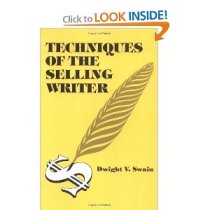
When I was a very young and inexperienced writer, the best advice I got from published authors of my acquaintance was to pick up a copy of Dwight Swain’s book, TECHNIQUES OF THE SELLING WRITER. Yes, this book has been around that long. Actually, this book has been around longer than I have. Before I had a chance to snag a copy from my local bookseller, I received a copy from my Great-Aunt Gladys, who was also a bit of an angel, encouraging my literary aspirations from the time I was two-years-old.
I consumed the book. I devoured it. I internalized it. I made its advice part of my subconscious. I refer to it frequently. My ancient copy is bright yellow, which makes it easy to spot on a crowded bookshelf from far across the room.
The power of two sentences changed my life as a writer.
One of the most difficult tasks for novelists is to condense their story down to less two hundred words. When someone asks you what your story is about, the temptation is to give all the backstory, the world-building and the details you painstakingly created. Nobody wants that. They want to know what the story is about.
Swain said that the heart of your story contains five elements, which can be reduced to two sentences: one a statement, the other a question.
Character
Situation
Objective
Opponent
Disaster
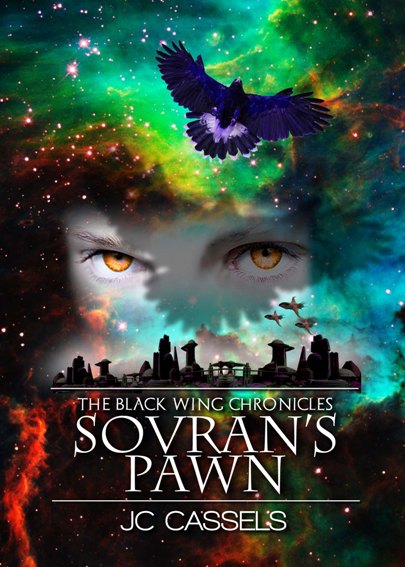
I’ve found that keeping this in mind when creating my own story summary helps immensely. When someone asks me what SOVRAN’S PAWN is about, I tell them –
When convicted traitor Bo Barron’s father is kidnapped, she has to go under cover on an interstellar cruise liner at a gambling tournament to steal plans for an illegal weapon that are being auctioned off to meet the ransom demand. An attempt on her life by a mysterious methane breather, and the timely intervention of a handsome Inner Circle agent leave Bo wondering whether there is a weapon at all and will she survive the cruise long enough to rescue her father?
That’s a seventy thousand word book condensed into eighty-two words.
Character – Convicted traitor Bo Barron
Situation – father is kidnapped
Objective – (There is a dual objective here) Stealing the plans, but also recovering her father
Disaster – getting herself killed, or losing her father
You know, if I were brutal about it, I could trim it even more.
Let’s take a story you’re probably more familiar with, like STAR WARS (ANH)
When Luke Skywalker learns he’s in possession of stolen plans, he joins forces with Jedi Knight Obi-Wan Kenobi to turn them over to the Rebellion. But can he rescue the princess and keep the plans out of the hands of Darth Vader, who is determined to destroy the Jedi and recover the plans no matter the cost?
Or this movie?
During WWII, American ex-pat Rick Blaine finds himself in possession of stolen letters of transit and no easy way to rid himself of them. When the Nazi occupying force, an underground leader, and Rick’s ex-girlfriend all conspire to recover the letters, who will get the letters and who will end up dead or in a concentration camp?
See? Easy-peasy, lemon-squeezy.
Pick a favorite book or movie…any story really, and try it! Let me know how it works for you!
I love interacting with other writers on the internet.
One Facebook group I belong to has been particularly helpful. Comprised primarily of mystery authors and members of Pennwriters, I find the insight of my partners-in-crime at How Many Pages Did You Write Today invaluable; particularly when it comes to the nuts and bolts of story structure. When I was slogging through SOVRAN’S PAWN, I posted a whiny complaint about my story and how much I hated this part.
“You must be at the meaty middle,” one author chimed in.
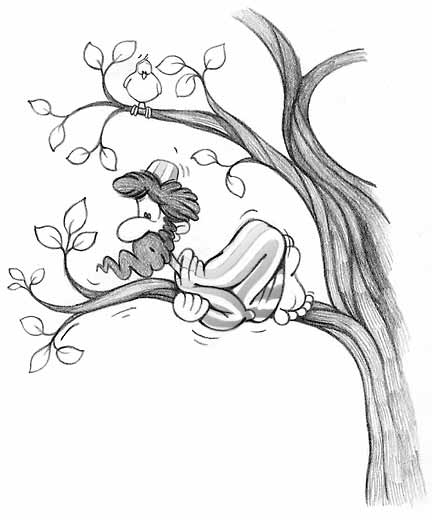
I was indeed. The second act of the three-act structure is often referred to as the meaty middle. The three-act structure is described as “the first act you send your character up the tree, the second act you throw rocks at him to make him climb higher and further out on that precarious limb and the third act is the payoff.”
Sounds easy, right? You try it sometime. It sounds easier than it is.
The rocks you throw at your protagonist need to drive the action forward and force the character into growth and change. All of this has to be done in such a way as to entertain your reader and not come across as contrived. Make your protagonist as miserable as possible. Make your protagonist suffer in such a manner that the climax and resolution are inescapable.
Again, sounds easier than it is.
It wasn’t until mystery author Kaye George reminded me of a little nugget I had forgotten. Your first and third act, you plot from your protagonist’s point of view. The second act, you plot from your antagonist’s point of view, then write it from your protagonist’s point of view.
Sounds complicated? Not really. If you think about it, who is throwing the figurative rocks at your protagonist? The antagonist. Who is calling all the shots, pushing your protagonist towards the inevitable showdown in the climax? Why, the antagonist, of course!
Wait a minute? Acts? I thought you were talking books, not plays! Well, yes. But the story structure does apply to both novels and plays. The first act establishes your character’s sense of normal and ends with the inciting incident that pushes your protagonist up the proverbial tree. The second act exists purely for the torture of the protagonist as he/she tries to decide a course of action. There is a major, mid-point plot reversal. You think things are finally going to work out for your protagonist, but something happens that lands him/her in deeper water than when they started. The rocks you throw continue to get bigger and bigger until your protagonist is clinging to the last bit of hope. Act three begins with the decision. The protagonist chooses and makes a sacrifice of some sort. There is a dark moment when it looks like they’ve chosen wrong. That’s when the author rewards or punishes the character for being so entertaining. In the end of the final act, a new normal is established for your protagonist.
But there is that pesky second act to deal with. The first and third are easy. Set ‘em up and watch ‘em fall. The second act is all that fun stuff in between during which your protagonist deals with the situation, makes sense of it, rails against it and finally snaps and gets proactive, rather than continuing to be reactive.
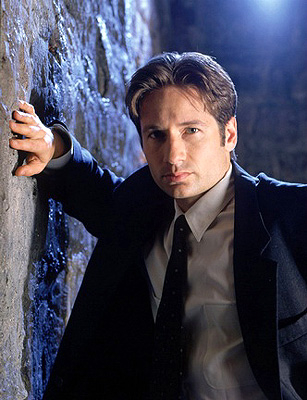
Fox Mulder, The X-Files
For me, I get so caught up in my protagonist, that I forget my antagonist. It’s a major flaw in my story crafting. After all, what would Sherlock Holmes be without Professor Moriarty? Superman without Lex Luthor? Fox Mulder without the Cigarette Smoking Man?
Yeah, I’m reaching. It’s late and I’m tired. Cut me some slack.
No. That’s the one thing you must never do to your protagonist! Push harder! Your antagonist wouldn’t sit back and let your protagonist call a time out! Pushing at this point makes your protagonist brilliant. He/she has to be. That, in turn will make a story shine.
The next time you sit down to read a book or watch an episode of Doctor Who, try breaking up the story into its basic three-act structure. Where is the inciting incident? Where is the mid-point plot reversal? Where is the decision? The dark moment of doubt? Where is the payoff? Has the second act been plotted from the antagonist’s point of view?
When I was in college, I let my friend Kathie read early versions of Bo and Blade’s story. Without fail, when she finished reading my most recent pages she would look up at me and ask, “Where do you get this stuff?”
That’s a question I’ve been asked a lot as a writer. Ideas and inspiration come from so many sources, it’s hard to narrow them all down. Some are an amalgam of several completely unrelated bits and pieces, others I can trace with pinpoint accuracy to their inspiration.
Here are a few lines from SOVRAN’S PAWN along with the images and places that inspired them —
***
“…Bo absently studied the domes and spires of Cormoran’s skyline. “
University of Tampa/Cultural Arts District – photo by Matthew Paulson
***
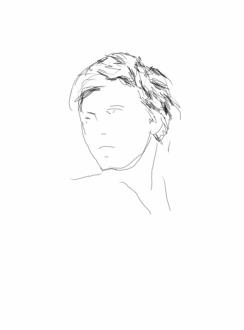
“Because with the sun behind you like it is, your dress is virtually transparent.”
***
“…Bo…followed the hostess as she rounded the corner to the east side of the terrace overlooking the glistening bay. Colorful boats danced across the waves. The view was breathtaking. “
***
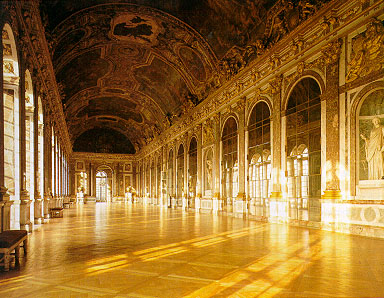
“Brilliant sunlight spilled through the massive wall of large-paned windows that lined the gallery. Behind his sunshades, Blade’s eyes flicked over the parade of Marin ancestors whose portraits lined the opposite wall. “
***
“He stepped out onto the sidewalk from the mass-transit station, leaving the cloying odor of exhaust fumes mixed with stale urine behind him. “
***
These are just a few of the images and places that have inspired scenes, settings, and even story lines. Movies, television, magazine articles, paintings, music videos, off-handed comments from friends and family all have made their way into my subconscious and my writing.
There are several more I could post today, but there are some things I just don’t want to share.
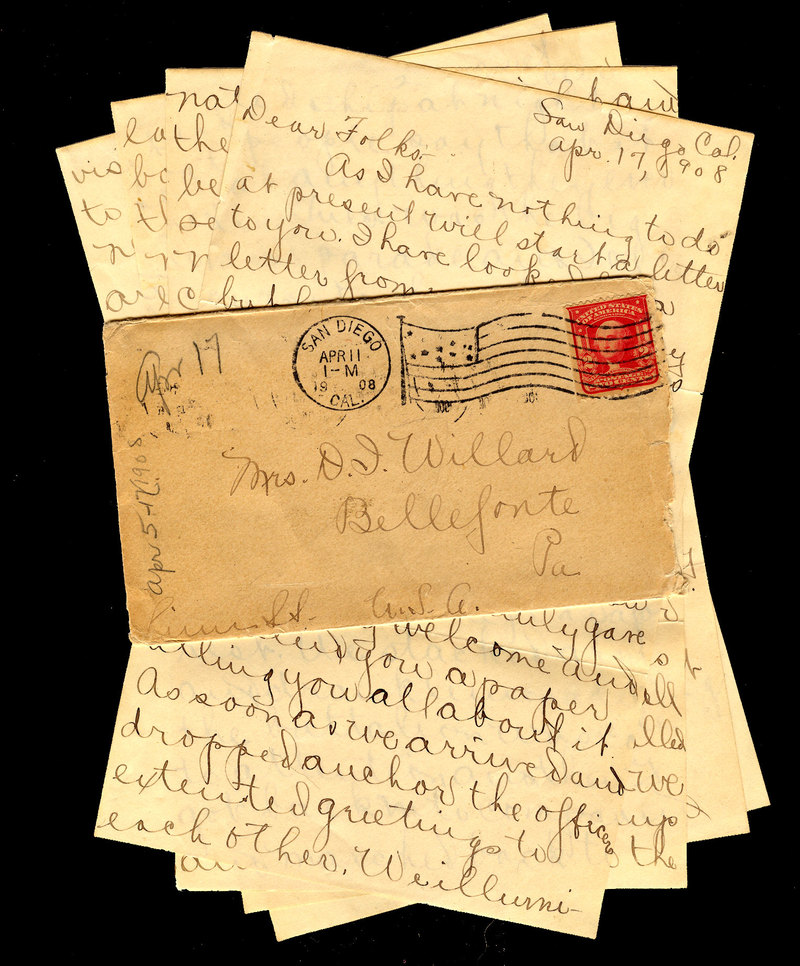
It’s very easy to play and a lot of fun. Anyone can play, writer or novice. Any number can play as well. It involves an exchange of letters or emails. The first player establishes his or her character, their situation, why they’re writing letters or emails and the identity of the person or persons with whom they are corresponding. Each player is responsible for developing their character and telling their part of the story. Plot, conflict, setting, and characters can all be developed this way.
The Letter Game has been used as a form of collaborative fiction or as writing exercises. Some books have even found publication after being written this way. In fact, that’s how I came across this game – I read one of the books!
The book was SORCERY AND CECILIA by Patricia Wrede and Caroline Stevermer. I was captivated by the idea of telling a story in that fashion. I’ve since played the game several times, with friends who were writers and friends who were complete novices, but possessed of excellent imaginations. One of those books has formed the basis for a SF adventure I’ve got simmering on the back burner, UNDERNEATH DEAD STAR. If the title sounds familiar, it’s also the title of a Blade Devon holofeature.
Yes, I do like things all neat, tidy and intertwined.
The great thing about using The Letter Game to tell a story and exercise your writing skills is that the setting and elements are virtually unlimited. DEAD STAR is set on a deep-space outpost on an asteroid near a star that is in its death throes at the edge of the known galaxy. SORCERY AND CECILIA is set in Regency England in an alternate reality in which magic is not uncommon.
Think of all the possibilities!
One of the most frustrating things for writers is the solitary nature of writing. The Letter Game provides a wonderful opportunity to interact with others within our own medium – kind of like a literary jam session, if you will.
In fact, this gives me an idea that I need to pitch to some of my sf writer friends who have suggested we all find a way to collaborate…
***
Have you ever tried a collaborative storytelling game?
I received a great compliment yesterday. I was informed that one of my characters has greatly upset the son of a friend by commenting that his girlfriend was cute and asking if she were legal.
It’s a long story, and you can find the short (flash fiction) version here, but I love creating characters, especially rascally males with lopsided grins and a mischievous twinkle in their eyes. Maybe it comes from having three older brothers, eight male cousins, and more than a decade between my sister and me.
This particular character, Raul the Pool Boy, has taken on a life of his own with friends on Facebook, a real job, and an apartment in the Haunted Hospital. When Raul first joined Facebook, my friends were informed of the fact that Raul was a work of fiction and simply an exercise for me in developing characters. They entered into the game with high spirits and great amusement. Over the past three years, many of them have forgotten his beginnings. Some more have even forgotten that he’s fictional. He even has friends of his own! From time to time, I have to remind them. That’s what happened with my friend and her son.
I toy with my characters, getting to know them outside of a formal story, figuring out how they will respond to a given situation. You could say I live with them a while. I haven’t bothered with the cute little writing exercises designed to get to know your characters in more than twenty years. Even then, I found those exercises to be more of a waste of my time than helpful. I really do treat my characters more like imaginary friends than anything else. I guess I’ve never really grown up.
In the early days of my writing, I worked with real-life, non-imaginary friends. Each of us took a character, created it, developed it, and then let them interact with each other and our world, getting to know them by just living with them. Other friends have participated over the years. Yes, it’s very much like role playing games, only we’re making up the rules as we go. For me, this approach has been instrumental in developing the worlds and the characters of the stories that populate my imagination.
Today, that game continues still. Friends have gotten into the spirit of the play adding Raul’s irrepressible mother and his long-suffering sisters to his circle of friends. The friend whose son was upset had to be reminded only last week that Raul was fictional. She didn’t believe me at first, then confessed that she’d believed him to be an undercover DEA agent. Don’t know why. I’ve never made any claims to that. But it makes a good story. I may use that.
My husband is by turns amused by it all and resigned to his lot as the spouse of a writer. He’s actually had this conversation with his own friends:
FR: Who’s this Raul guy that keeps commenting on your wife’s posts on Facebook
DH: He’s the pool boy.
FR: When did you get a pool?
DH: We didn’t.
FR: You don’t have a pool?
DH: No.
FR: But you have a pool boy?
DH: Yes. He lives in the hospital.
FR: Ummmm…
Who says being married to a writer is boring?
Make no mistake, Raul will have a starring role in a contemporary novel in the near future. In the mean time, you can find him hanging out on Facebook and flirting shamelessly when he’s not working.
In my last post From Bones to Hair: Building a Story, I talked about how I build a story layer by layer, building on each draft and adding more details and “fleshing” it out.
I also enjoy drawing. I’m not very good at it, but when I was a child, I chose to devote my energy to learning how to write rather than draw. My aunt was an artist who kept me supplied in Walter Foster books, charcoals and pencils from an early age. It wasn’t until I was expecting my second child that I took a formal drawing class at the local community college to learn better technique.
By that time, I’d been a professional writer for more than ten years and had decided to take time off from writing to be a full-time mom. In that class, I found that drawing is much like building a story.
Recently, I was looking at videos on You Tube, and I came across this one. It illustrates how layering and tweaking and not being afraid to make mistakes is vital to the construct of artistic works. I’m sure if I kept looking, I’d find another video that illustrates the same layering technique for music. This time-lapse video offers a fascinating look at how to build a lifelike drawing. The results are impressive.
When I write a new story, I approach it like constructing a building or a living organism. First you lay the foundation (premise), then you build the framework, which I envision as the bones. At this stage, I have the main plot points down and the major scenes are in their place to push the rising and falling action to the climax and the denoument. Some scenes are fully realized, others are brief narratives that describe the action and the purpose of the scene. Anything goes at this point. Anything, no matter how bizarre or disjointed is allowed. That’s the first draft.
The second draft is where the meat and connective tissue are added. In the second draft, I focus on transitional scenes and place the actions and dialog that foreshadow coming events. I beef up and write the scenes that are simple narratives and I look for plot holes and dropped plot lines. Simple scenes that were mostly dialog get blocking and characters start moving around the space. Scenes that do not serve to advance the plot in any way are cut, but saved for reference or re-purposing.
The third draft gets skin. The “skin” hides the technique. Scene and sequel should flow seamlessly. Transitions are smoothed. Passive voice is removed. Grammar is analyzed for consistency. Character reactions are analyzed and tweaked for appropriate response. Stilted dialog is reworked to sound more natural. Characters’ mannerisms and subtle gestures are tweaked. Setting and descriptions take center stage.
The fourth draft is the hair, makeup and clothing. In the fourth draft, typos, overused words and phrases come out. The fourth draft is where the little details are added to ensure that readers are emotionally involved in the story. Everything that doesn’t create immediacy or place the reader in the middle of the action comes out or gets reworked. This is the devilish draft because it takes so long to complete and the results are not readily apparent to anyone but me. The devil is in the details and the fourth draft is all about the nit-picky details. Upon completion, this is the draft that goes to the beta readers for a final look.
A fifth draft goes to the editors for a figurative photoshopping, and becomes the final draft that makes it to publication.
I don’t know if all writers work this way, but this technique has worked for me because it allows me to write cyclically. Once I have the main points in, I can jump around in the story as details for plot threads solidify in my mind, returning to key points to make sure there is a coherent flow from one to another.
***
The first draft of THE BROKEN WING is complete and revisions have already begun on the second draft. Still no concrete date set for its release.
With the discussion of a title for Book Two of THE BLACK WING CHRONICLES, several people have asked about the origins of THE BROKEN WING as a possible title. No, it doesn’t refer to Blade’s injuries from the hovercycle race, nor does it refer to Bo’s dislocated shoulder, although both are convenient symbols that just sort of fit.
THE BROKEN WING comes from a passage in SOVRAN’S PAWN. A character quotes from an ancient epic poem from Bo’s people titled Requiem for the Broken Wing.
“When dark clouds gather, when the wind howls through the Bluestone Valley and whispers through the trees atop the Gallis Highlands, when the light of hope is fading, on the rising thunder will come the Black Wing, screaming through the darkness like the avenging hand of the Maker. There will The Barron make his last stand.”
Her ancestors, immortalized in the epic poem known as Requiem for the Broken Wing, had faced a no-win situation and fought fiercely to the last man. Like them, she intended to give a good accounting of herself before drawing her last breath.
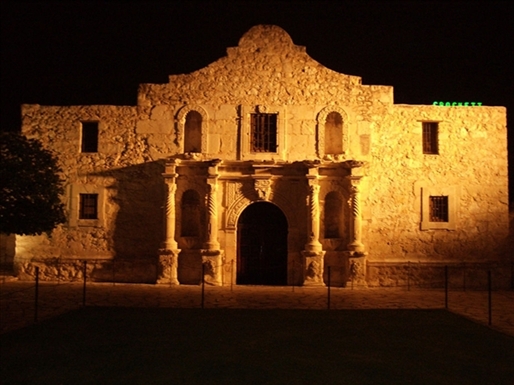
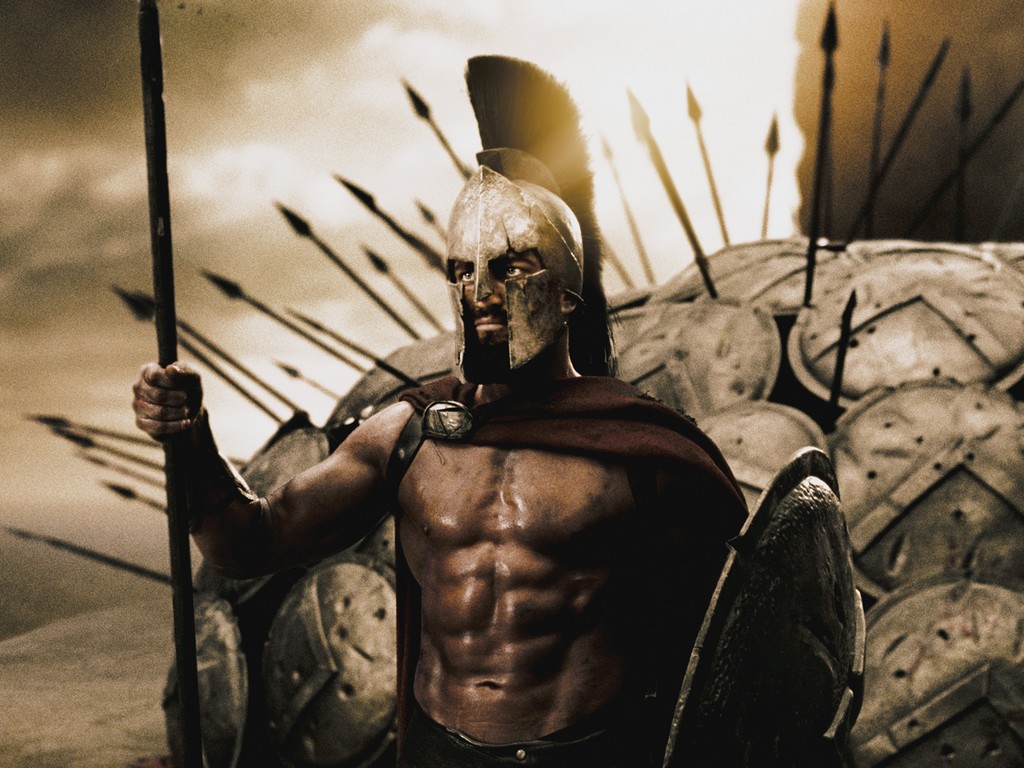
The idea for the poem was inspired by stories from our own human history. Stories of courage in the face of certain defeat — of men and women who held impossible battle lines knowing that they had no chance of survival — Thermopylae, the Alamo, Bastogne to name a few.
The “Broken Wing” of the poem refers to the force she commands, the much contested and feared Black Wing, and its decimation following The Barron into that ill-fated last stand so many centuries earlier. It’s no accident that the last book in this series is titled BARRON’S LAST STAND.
As you may know, The Black Wing is Mondhuoun’s precision combat wing. Bo, as The Barron, is its commander. Control of The Black Wing is at the heart of the conflict of this series, so it only makes sense that the titles for the subsequent books come from this epic poem in one fashion or another.
The story arc of THE BLACK WING CHRONICLES isn’t just about Bo’s quest to clear her name, it’s about the sacrifices made by a young ruler to keep her people from becoming embroiled in a war against the Commonwealth that they can’t win. In the process, she faces betrayal at the hands of those she trusts.
So at the risk of giving away too much of what you can expect to find in Book Two, THE BROKEN WING isn’t about happy endings or learning to fly again as much as it is about facing an impossible situation with courage and determination. In that respect, I think the title fits.
***
What are some stories of courage in the face of no-win, impossible situations that have inspired you?
“Put a lot of sex in your book. It’s what readers really want now. The more graphic and taboo the better.”
“We’re looking for erotic stories.”
“We’re looking for ménage…”
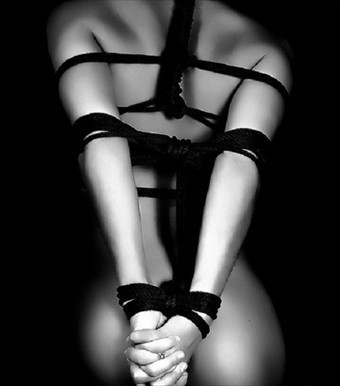
“We’re looking for BDSM stories. They don’t have to have HEA, but at least HFN.”
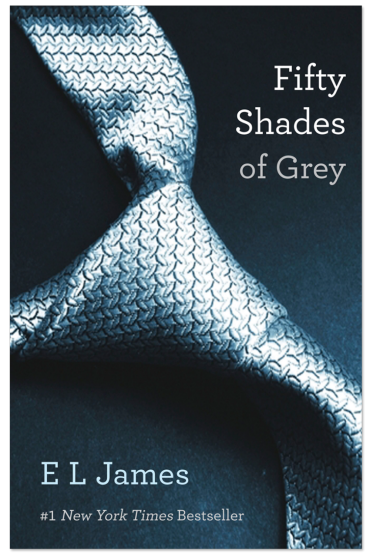
“Fifty Shades of Grey has sold more than 40 million copies worldwide, topping best-seller lists all over the world and set the record as the fastest-selling paperback of all-time…”
Of all the things I just typed, I find the last one the most disturbing.
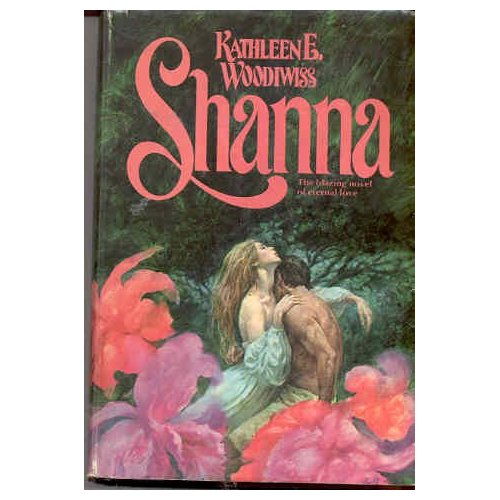
I’m not a prude by any stretch of the imagination. I cut my teeth on romance novels by Kathleen E. Woodiwiss, Rosemary Rogers and Janelle Taylor. I rolled my eyes over Heather Graham’s time in the spotlight, but I read her books despite her “delicate, shell-like” ears and the “quicksilver” that seemed to run through everyone’s veins.
Even as a high-school student, what made those authors palatable to my mother was the fact that, aside from never having to explain the facts of life to me, these heroines were having awesome sex in a loving, monogamous, often married – or soon-to-be – relationship. The sex in these books was reasonably graphic in a purple prose kind of way and the language was seldom vulgar or crass but filled with flowery euphemisms that communicated the gist of the action quite effectively. The kinky, degrading sex acts were the purview of the villains. Heroes never treated a heroine with disrespect. Heroes cherished the heroines and their lovemaking reflected that.
It made an impression on me. So did my parents’ often Victorian sensibilities. To this day, I believe that some things are personal and private, and not meant “for the titillation of the masses,” to quote my own hero.
I originally wrote SOVRAN’S PAWN as an erotic science fiction novella in answer to a submission call from an editor I admire and wanted to work with. I read other novels and novellas that she’d edited for an idea of the kind of story she was looking for, and I crafted my book accordingly.
I finished the second draft and something odd happened. I remember being curled up in my office rereading the manuscript and noticing that my characters had subtly changed. The basic nature of who they were was different…harder…more brittle and infinitely less likeable. Blade Devon, my hero extraordinaire was a cruel misogynist who took particular delight in humiliating his soul mate. My strong, feisty heroine had devolved into a rabid bitch in heat who didn’t care how degraded she was, she wanted it and him all the more.
The coup de grace for this storyline occurred when my 78 year-old father picked up my printed pages and started reading aloud to my step-mom and husband. He paused, lowered the manuscript and peered over the tops of his glasses at me. The last thirty years slipped away and I was a teenager once again, slinking in after curfew. He didn’t have to speak to make his disapproval felt. To be honest, I was ashamed of myself anyway.
I’m a mom of daughters. I’m a grandmother of granddaughters. I wouldn’t want my 16 year-old granddaughter reading what I had written. I wouldn’t want her mother reading it either! Everywhere I looked the books that were getting the most publicity and the sales had lots and lots of graphic (and kinky) sex in them. It appeared that to sell my book to a publisher, I had to sell my soul as well.
After my father went home, I stared at the manuscript, trying to reconcile my own values with those the publishing industry seemed to give preference to. By accident I stumbled across a blog post titled “Killing the Porn Muse.” The author put into words what I’d been feeling. As writers it’s up to us to define relationships. I wanted to model for my girls what a loving, committed relationship looked like from the inside out, after all, that’s what I’m blessed enough to have found for myself. It’s what I want for them.
I’m not saying that being adventurous in the bedroom runs counter to that, quite the contrary. I think that in a loving, committed, trusting, monogamous relationship, a couple is only limited by their own imaginations and sense of propriety. What I am saying is that I don’t think the glorification of sex without the accompanying emotional attachment does anyone any good.
For myself, the intimacy of lovemaking between two people who are deeply in love is intensely personal. I can’t write a graphic sex scene without it being either too clinical, or too pornographic. It just feels too personal and I don’t see the need for it. Aside from that, for my children and grandchildren, I don’t want to advocate entering into a sexual relationship without first having a committed monogamous and loving relationship.
I will write you adventure. I will write you banter. I will give you nail-biting fight scenes and hovercycle chases. But do not expect me to invite you into my characters’ sex lives. You know they’re doing it. You don’t need to stand on the sidelines with a scorecard.
If you do find yourself in the bedroom with them, don’t expect to see anything glistening or heaving. This is one instance when I will tell, not show, what is going on. Innuendo is an art. I intend to practice it well.














 Gotta Name My Blog