After having spent the better part of my adult life working in the media, I’m still fascinated by the impact it has on the hearts and minds of people. There is truth in the idea that the media shapes our culture and our public perceptions. As someone who spent so many years on the inside, I can attest to it. When I see controversies and personalities capturing the public attention, I’m not so much interested in what everyone is saying as much as I am why they are saying it. I have to wonder and ask the pop-culture icon, “What’s in it for you?”
Perhaps my own fascination with the ease with which public perception can be shaped is why I gave Blade his career in holofeatures and made him so skillful at media manipulation. It just seemed a necessary skill for him to have.
As a writer, I’m aware that I wield the power to shape public perception. Anyone with any kind of platform does so to a degree. In our age of one hundred forty character sound bites, the more controversial and upsetting, the better. But to the people who find themselves bristling in righteous indignation and organizing against the flavor-of-the-moment, I offer this question: What does the controversial figure have to gain from your ire?
I run another blog, less about writing and more about things of a more personal nature. On that blog, I asked that question and I offer you the link here if you’d like to read more about masters of media manipulation.
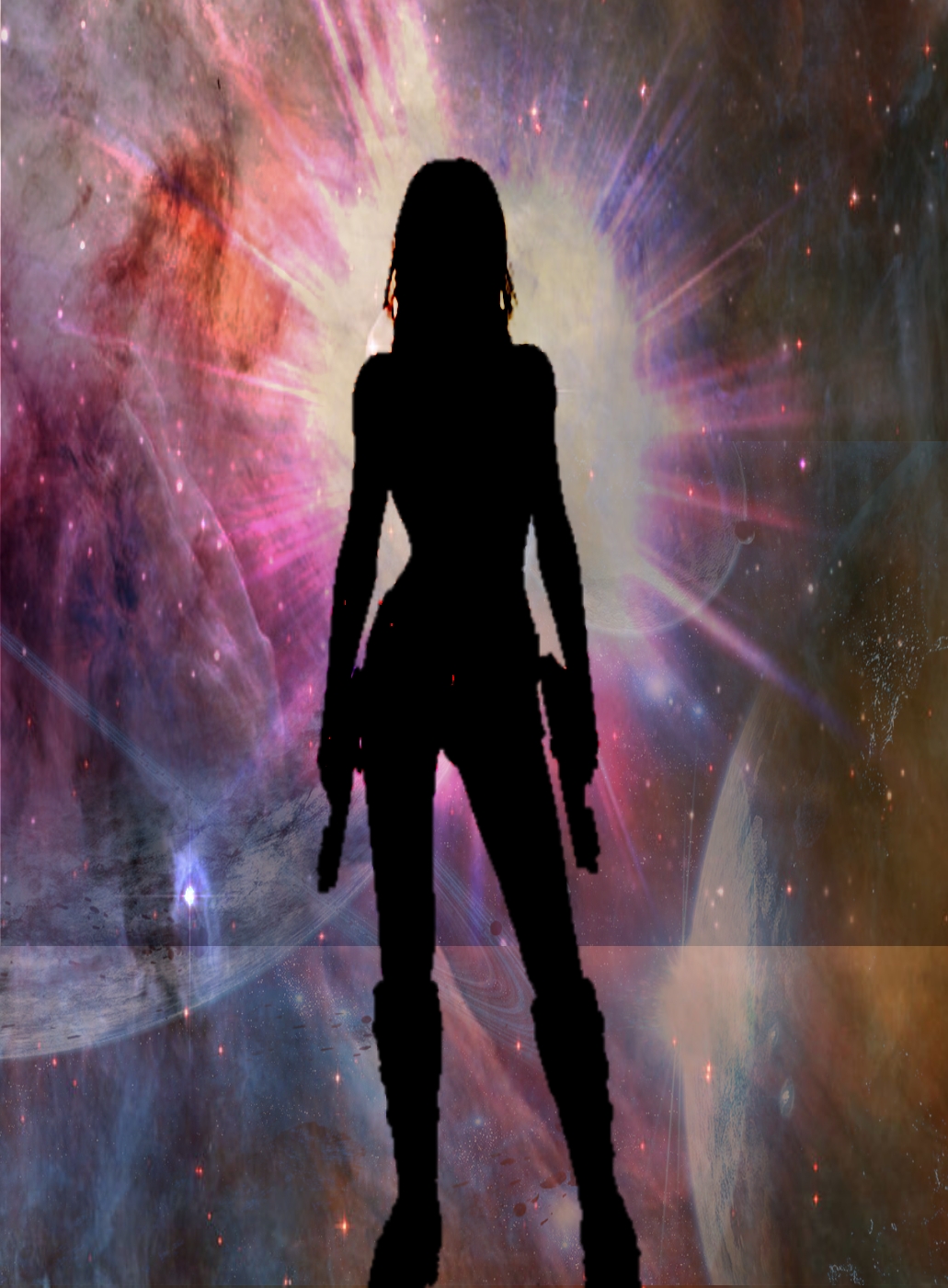
I caught some flak from a handful of SOVRAN’S PAWN readers about my heroine being too weak. I had the unenviable task of deconstructing her from the kick-ass warrior woman of BARRON’S LAST STAND into the ingénue she was when her story started. Those readers may not realize that THE BLACK WING CHRONICLES is as much about Bo’s evolution from naïve, sheltered young princess to bitter, disillusioned warrior queen as it is about clearing her name.
Good fiction is about change and the growth of the main character. Bo had to start out young and uncertain in order to make her growth into “The Scourge of the Seventh Sector” that much more poignant. THE BLACK WING CHRONICLES is a character driven story, and in character-driven stories, your main character must go through profound changes to find the truth of who he or she really is. When you’re talking a story arc over several books, the changes may not occur quickly enough to suit some readers, but they need to unfold organically or the story will fall flat.
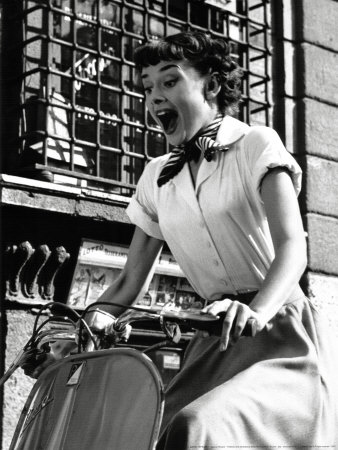
In SOVRAN’S PAWN, Bo is barely twenty years-old. I was inspired by ROMAN HOLIDAY with Audrey Hepburn. It’s a similar principle. Here is a young, privileged woman who finds herself outside her comfort zone and away from the trappings of her title. Despite her training, she’s been insulated from interacting with ordinary people and is at a loss for how to deal with them. For the first time in her life, she is making her own decisions and responsible for no one but herself. In the process, she is learning who she is and what she has to contribute to her society, and she makes mistakes.
Unlike the Hepburn character, people are trying to kill Bo, and she has military training. However, her military training is entirely theoretical, not practical. Her jaded guides on this journey are highly trained special operatives with considerable field experience who, for reasons of their own, are driven to protect her, keeping her out of trouble whenever possible. In their own way, both her Uncle Royce and Blade Devon take it on themselves to fill in the gaps in her training. By the end of SOVRAN’S PAWN, Bo is taking the first real steps towards independence, with her own ship and a romantic interest in Blade, who is a wholly unsuitable partner for her politically.
Roughly two years pass between the end of SOVRAN’S PAWN and the beginning of HERO’S END. In that intervening time, Bo has settled into a routine with a public role as Blade’s Joy Babe Companion and a private role exploring her more larcenous endeavors. In her early twenties, Bo has learned how to be light-hearted and how to have fun. As any young woman her age, she is aware of her responsibilities, but not overly burdened by them, doing the bare minimum to meet them. She prefers to party with her friends and spend time with her boyfriend, the exciting and dangerous Blade Devon, much to the disapproving censure of her uncle. Bo still has some growing up to do. She isn’t always likeable. She isn’t always sympathetic.
HERO’S END is different from SOVRAN’S PAWN in that the plot is exceedingly more complex with more point of view characters and more plot threads woven through it. Where the theme of SOVRAN’S PAWN had more to do with false identities, HERO’S END is about the nature of faith, and not necessarily the religious kind. It’s about optimism and trust versus cynicism and doubt.
Still somewhat of an ingénue from being sheltered and protected by Blade, her uncle, and her brother, Bo has a naïveté about her relationships with the people around her. Over the course of HERO’S END, both Bo’s and Blade’s faith are tested. Bo loses her innocent faith while Blade gains a new faith. Bo embarks on the hero’s journey, gaining the streetwise confidence she’ll need. Blade, on the other hand, must resolve the dichotomy between the lying, ruthless, borderline sociopathic behavior he’s been guilty of, and the paladin hero he plays in holofeatures.
By the time BARRON’S LAST STAND begins, seven years has elapsed from the date of Bo’s trial and escape. She has seen too much and done too much. Her innocence is long gone. Her only faith lies in her own abilities. Tough, dangerous, and street-wise, Bo is no longer the weak ingénue waiting for rescue. She will rescue herself, thank-you-very-much.
Blade, on the other hand, has spent the intervening years doing penance, trying to redeem himself as the real-life version of the hero he played in holofeatures. Their roles reverse and he is the one who ends up being rescued by her more than once.
By the climax of BARRON’S LAST STAND, Bo Barron will be a heroine of epic proportions. She will have been tested and tempered by fire and hardship. THE BLACK WING CHRONICLES are the story of how a young, naïve princess, accused of treason, earns the right to command the precision combat wing whose loyalty and service can tip the balance of power in the Commonwealth from one house to another.
When my daughter, Amanda, was a tween, she asked for my advice on writing. I was on the road with my job, so I sent her the advice via email. She’s grown now and pursuing her career and off on that wonderful adventure called life. This past weekend, I was going over my old computer files (and pictures from those days, because I miss her) and I came across my advice from the road.
As I read over what I’d sent her, I realized it holds true today for her little brothers and sister as well as it had for her. For what it’s worth, here is a mother’s writing advice:
***
Imagine. Exercise your imagination regularly by playing. Pretend to be someone from a TV show or movie with your friends. If you feel too old for that, shut yourself up in your bedroom and daydream. Wonder what it would be like to be someone else, then pretend you are that person. Wonder what it would be like to do something, then pretend you are doing it. Make up stories in your head and imagine how they would work out.
In your imagination, nothing is impossible. If you wonder what it would be like to have magical powers, then imagine you have them. Go through the day looking for situations in which to use them. How would they work? How would they make problems for you? How would you solve problems with them?
If you wonder what it would be like to live 100 years in the future, then imagine that you do. What would the world be like? How would your life be different? What kinds of problems would you have that you don’t face now? Where would you live? What would the you of the future think of the you of today?
Listento how others tell stories or describe situations in every day conversations. Some of the best writing is just taking what we hear in conversation and transcribing it into something grammatically palatable.
Read. By reading, you will see firsthand how professionals describe ordinary scenes and actions. By emulating them, you can get a feel for the way words flow together. The more you read, the more familiar you will become with language. Read all kinds of books from different decades. See how writing has changed during the 20th century.
Write. The only way to learn to write is to sit down and do it. It doesn’t have to be good the first time. Even professionals must write and revise for hours… days… months… years even, before they are satisfied that they have expressed themselves adequately.
Rewrite movies, TV shows, and books.Write a story using characters and settings from a movie, or any story that captured your imagination. Add yourself as a character and take a course of action that changes the outcome of the story. Take characters from one movie or show and put them in the setting of another.
Experiment with the language. Don’t be afraid to string words together in new and unusual ways. Always be on the lookout for different ways to say the same thing. Instead of saying that someone works at a gas station, he can be a petroleum distribution specialist. A writer is a word merchant. A dog is a canine companion. A cat is a furry sidekick. Your best friend can be your partner in crime. Your mother is your maternal unit. Your father is your paternal unit.
***
This advice from the road still holds some truth. Your imagination is a muscle and you must exercise it regularly to keep it strong.
How do YOU exercise your imagination? What advice would you have for Amanda’s now-tween brother?
Goal – What your character wants Motivation – Why/How badly your character wants it Conflict – What stands between your character and his/her goal
If any of these three elements are weak, your story will be weak as well. It doesn’t matter how beautifully you command the language, or how skillfully you wield action verbs, without a well-defined goal, sufficient motivation, or suitable level of conflict, your story will fall flat and you will lose your reader.
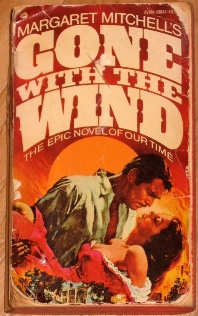
Without a clearly-defined goal, your character will wander aimlessly along, smelling the flowers and wondering what he/she is supposed to be doing. You should be able to answer quickly and concisely what your Main Character (MC) wants. In Gone With The Wind, Scarlett wants Ashley Wilkes. Everything she does springs from this want, from befriending Melanie Hamilton to making her home in Atlanta, it’s all done with the intent to stay close to Ashley Wilkes so she can make him love her.
In The Great Gatsby, Gatsby wants Daisy. In The Sting, Hooker wants revenge for the murder of his friend. In The Princess Bride, Westley wants to claim Buttercup.
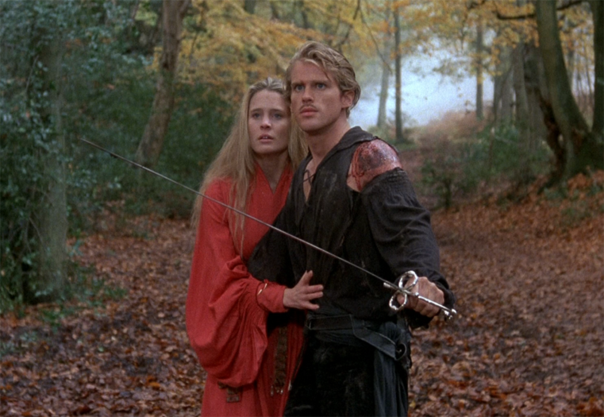
Let’s take a closer look at The Princess Bride. That’s a good one to start with because the characters’ goals are so clearly defined. Westley wants to claim Buttercup. Inigo wants to find the six-fingered man. Humperdink wants to start a war between Guilder and Florin. At some point, their goals come into conflict with one another through the action in the story. Westley and Inigo are pitted against each other because Inigo was hired to kidnap Buttercup and Westley is following them so he can rescue her.
This is where the motivation behind the goals leads to the level of conflict created. In the famous sword fight scene, Inigo’s heart isn’t really in it. Why not? Because Westley isn’t the six-fingered man therefore, he isn’t sufficiently motivated to kill Westley. Westley, however is strongly motivated to defeat Inigo because he stands in the way of rescuing his dearest love, Buttercup. The motivation behind meeting the primary goal is stronger than the motivation behind the secondary goal, so there is conflict. With each clash of one goal blocking another, tension builds.
The story comes to a head when the characters’ primary goals come into conflict, when Westley, in his pursuit of Buttercup, stands in the way of Humperdink realizing his goal of using Buttercup to start a war. This occurs at the climax. Will Westley’s motivation (love) defeat Humperdink’s motivation (greed)? If Westley didn’t have deep feelings for Buttercup, would he fight so hard to rescue her? If Humperdink weren’t so greedy for power, would he be so single-minded in his purpose to use Buttercup to start a war?
This is why motivation is so important. How high are the stakes for your character? What does your character stand to lose? How will it impact his life if he fails? How far is your character willing to go to attain his goals? What will it take to make your character give up on his goals? When you can answer those questions, look at your answers and figure out how to throw each and every answer into your character’s path. That is how you build conflict.
Conflict is having your character face the very real possibility of being thwarted in achieving his goals. Conflict is blocking your character from his goal. All your character has to do to reach safety is cross a bridge. What do you do? You blow up the bridge. Now what does your character do? Well, your character has to find another way across. He learns of a ferry just upriver, but he has to fight his way through hostile natives to get there. If he doesn’t have adequate or believable motivation for continuing forward, the reader will wonder why he bothers. Why doesn’t he simply go home?
You have to communicate to your reader just how important the goal is, how motivated they are to attain that goal, and how difficult the conflict is to overcome. If any of these fall short, your story will lose tension and consequently your reader won’t care.
So, say to your character “Tell me what you want, what you really, really want…”
As a general rule, I do not read manuscripts from unpublished writers. It’s always a bad idea for writers to do that. No one wants to deal with a plagiarism lawsuit at a future point in time.
The other problem I have with it is that I’m a nice person. I don’t like giving a writer his or her first critique. They hurt. I know, I’ve been there. You’ve spent years writing in secret, stealing time to spin your tales and put them to paper. When you’ve shown them to people, your friends and family have raved over how good you are. English teachers raved over them. You think you’re ready to be published. You’re not.
It’s incredibly rare to find an untrained author who has never had a critique nor studied the craft to come out of the gate with a brilliant masterwork. Sorry. If you’ve never had a critique by an industry professional, your manuscript contains the following problems:
POV shifts within the scene
Passive voice
Telling rather than showing the action
Excessive and unnecessary dialog tags
There are more, but these are the top four and that’s enough to start with. I know this, because I was once a writer taking the first steps from hobby fiction spinner to novelist. When your manuscript hits the slush pile with these no-nos on the first page, you’ll never make it past the reader because he or she will never read past the first few pages. Publishing houses hire readers whose sole job is to sort through the slush pile for these red flags.
POV Shifts Also called “Hopping Heads” it’s the most defended newbie marker. Good prose starts with a POV (Point of View) character who provides the perspective through which the scene is filtered. Nothing can happen out of sight or hearing of this character. Once this character is identified, you cannot jump into another character’s head within the same scene.
“But…but…” I can hear you now. Stop it. You sound like a motorboat.
POV is so important in some genres and sub-genres that it’s become trope. Traditional Gothic Romance is told through the eyes of one character, the heroine, in first person. Hard-boiled detective fiction is also traditionally first person, told from the perspective of the detective. When writing in third person, pick a character and let that character tell the story. If you must add other POV characters, keep them to a minimum. No more than two or three max for longer, more epic stories with complex plot lines. If the action in a scene leaves the presence of your POV character, the scene ends. Break it and start a new scene with a new POV character or rewrite it from the POV of the character who actually follows the action.
A good example of this was THE GREAT GATSBY. Nothing happened outside of Nick’s presence. He was the narrator who observed and participated in Gatsby’s pursuit of Daisy. Anything that happened outside his presence had to be related to him in one manner or another by another character. He observed actions that didn’t make sense to him at the time, but made sense as the story unfolded.
Why is it such a hard and fast rule? Simple. Good fiction evokes emotion in the reader. My nine-year-old son read THE OAK INSIDE THE ACORN by Max Lucado. When he finished, his eyes filled with tears and he threw his arms around me and sobbed. Emotional response. Good prose. One POV.
By hopping heads, you rob your reader of the opportunity to identify with your character within the scene. When you read, you slip into that character’s skin and you experience that character’s world. The reader gets an insight into a personality often unlike their own through the internal monologue and the character’s voice. It’s also jarring to settle into one character’s perspective only to find yourself across the room in another’s.
Passive Voice
Simply put, passive voice uses passive verb forms or “to be” verb forms. “She was singing” as opposed to “She sang.” The “to be” form of the verb separates the reader from the action. The active verb form makes the reader a participant in the action. If you use passive verbs, do it deliberately to serve the telling of the story, for pacing, or to emotionally detach the reader from the action.
That isn’t to say that you can never use am, is, are, was, were. You can. Just make sure when you use them, you’re doing so for a reason and not because you don’t know better. Editors can tell the difference.
This goes hand in hand with
Telling Rather Than Showing The Action
This is trickier to explain. Don’t tell me the character “looked angry” or “was angry” or did anything “angrily.” Show me the emotion. Don’t name it. If you do it right, I’ll recognize the emotion by the character’s action, tone, word use, facial expressions, and body language. Telling me that Donald Duck got angry and yelled isn’t as funny as showing me how Donald sputtered, turned red and jumped up and down, screaming incoherently, with his fists clenched, while gesticulating wildly.
Telling, rather than showing, insulates the reader from the action, events, and emotions in the scene. It has its uses, but should be employed purposefully and sparingly.
Excessive And Unnecessary Dialog Tags
This is such a pet peeve of so many editors of my acquaintance that one has gone so far as to write numerous blog posts on the topic. Just bringing it up will send her off on a diatribe.
Dialog tags are used to identify the speaker. The most common and least distracting is “said.” It’s quite acceptable to name the character and follow it with “said.” When you get creative and follow a question mark with “asked,” or an exclamation point with “exclaimed” or “explained” or “surmised” or any of the myriad others that newbie writers use, you start distracting your reader. It’s self-explanatory that a question was asked or an interjection has been…well…interjected!
If you must get creative, use action to identify your speaker rather than increasingly pompous dialog tags.
Caroline lifted the calling card from the tray. Her eyes narrowed as she studied the curlicues swirling across the white paper. Her lips tightened. How dare he?
“Mother, Charles has come to beg forgiveness for his behavior last night.”
Her mother didn’t look up from her needlework. “Shall I refuse him?”
I was very excited to find a blog post on foreshadowing this morning. Unfortunately, it didn’t really tell me anything about foreshadowing. It told me more about the author’s latest book. That’s all well and good, but I was put off. It felt like someone was pulling the old bait and switch on me. That makes me cranky. When I get cranky, I do something about it. So this morning, I wrote my own damn post on foreshadowing. So there.
On About.comRichard Nordquist defines foreshadowing thusly: The presentation of details, characters, or incidents in a narrative in such a way that later events are prepared for (or “shadowed forth”).
In short, it’s setting the stage for future events. Foreshadowing creates a mood. It sets up the audience for the main conflict and the climax, or the catalysts that bring about the climax. It’s a device mystery writers use to plant red herrings and lead the reader to the clues that solve the case. In horror, it’s used to create mood and warn audiences not to get too attached to that character because he or she will be the next victim. In romance, it provides the niggling little doubts as to whether or not the hero and heroine will end up together.
Most readers never consciously notice it. Executed properly, it is very subtle and paves the way for the emotional impact the writer seeks to evoke. Writing fiction is all about evoking emotion. I’ll go back and say it again. The first and greatest lesson I learned was that as a writer, if you’re not evoking emotion in your reader, you may as well be writing a cookbook. But then, even the best cookbooks evoke some kind of emotion these days.
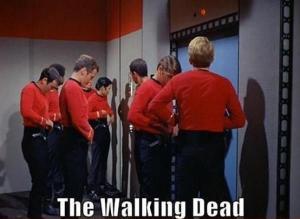
I mention foreshadowing because I’m consciously using it in HERO’S END. There’s a bit of a mystery going on and foreshadowing is a natural tool in mysteries. Foreshadowing isn’t all dark portents either. As a writer, if I’m going to use an object to save the day, or to slay the bad guy on page 180, I need to introduce the object around page 20 or so. If a fact is going to be the catalyst for an emotional scene, I need to allude to the fact early and repeat it a few times before it actually causes the issue. If the reader hasn’t built up the same emotional response as the character, when the character explodes in a ball of angst, it seems to have come out of left field. Or if one of your characters must die in keeping with the story line, you need to prepare the reader for it. Think red shirts.
Some writers call it back-writing. Once you’ve written the main story, you go back through and sprinkle the images, references, clues and allusions throughout the story, building up to the climax or event.
In SOVRAN’S PAWN, I used Blade’s sunshades, which interfaced with his IC data reader for a head’s up display. I introduced the shades with Blade when he met Bo. I introduced the interface in the following chapter. At the climax, the shades and their interface were vital for getting him where he needed to be. Without the mention of them earlier, it would have seemed like a Deus Ex Machina intervention and a cheap device.
I read a debut novel by an author of my acquaintance in which her main character does a complete about-face of personality at the climax. Unfortunately, there was no foreshadowing of this possibility, so when it happened, her readers rebelled. Because her book was published by an imprint of a large publishing house, there’s really no excuse. This is the kind of thing good editors and beta readers normally catch.
Never underestimate the value of foreshadowing or the subtlety of a skilled hand on the pen.
Writing is a lonely business. I say that quite a bit. Mostly because it’s true. Writers are solitary creatures, often insulated against interacting with other people by the very nature of what we do. Writing takes time. It also takes quiet and, for most writers, a measure of solitude. So when writers get together, either online or in person, it’s a pretty big deal for all of us. We have human interaction (after a fashion) with others who understand this strange life we lead. We discuss things that don’t make much sense. We agonize over things that seem trivial. We also get feedback on our work, and exchange tips on how to do it more effectively.
In a recent post, I talked about the concepts of Scene and Sequel. I got a lot of great feedback on that post. But perhaps the feedback that meant the most came from my friend — and my daughter’s favorite author — Hana Haatainen Caye who regularly writes for iStorybooks (among other things.)
Hana has many irons in the fire at any given moment. She has a very successful blog The Green Grandma, in which she talks about living a more natural, organic life without chemicals. Her book Vinegar Fridays came from a regular feature on her blog about the many uses of vinegar in and around the home. Even now, Hana’s working on getting it ready for release as an e-book! She’s one of the busiest and most prolific writers I know.
Imagine my surprise when she messaged me about how much my post on scene and sequel had helped her improve her writing. After implementing it in her own work in progress with great success, Hana took the concept to her writer’s group. They dissected their own stories that night according to the key points of scene and sequel, and their assignment is to incorporate both into their stories over the next month.
It’s always meaningful to me to hear how the little things I write — whether it’s a blog post, a book review or a novel — have a positive impact on someone’s life. For a moment, that solitary life I lead seems a little less lonely. I’m touched that Hana took the time to tell me how she used what I’d written.
For a writer sitting in the dim light, huddled around the cold glow of a backlit computer screen, with only the whirring of the fan to break the silence, the comments, emails, and reviews are the only applause we get. Sometimes, it’s the only way we know that we are not alone, and that what we do matters to someone other than ourselves. For those who take the time to tell us, we are eternally grateful.
The buzz for NaNoWriMo (National Novel Writing Month) is in full swing on the writer’s blogs and chat groups. I’m torn about participating this year. I probably will not because Book Two of The Black Wing Chronicles is in its second draft now and I really won’t have the time to crank out 50k words for fresh novel.
It’s a little-known fact that SOVRAN’S PAWN was a pinch-hit NaNo Novel. Two family crises in succession took the wind out of my sails for the Southern Humor story I was working on, so I replaced it with a the back story for my REAL novel, a space opera adventure on which I’d written nearly as many words. By the end of the month, I had the first draft for what would become SOVRAN’S PAWN, a novel I never intended to write. I mentioned the project in my personal blog that has pretty much sat disused since SOVRAN’S PAWN was released this past spring.
I considered the substitution cheating, but my NaNo buddies encouraged me to count it as a win since word counts had been comparable and I’d finished the first draft of the novel in the process.
NaNoWriMo is a wonderful exercise for writers and wannabes. I strongly encourage anyone who has entertained the idea of writing a novel to give it a try. The discipline needed to simply sit down and write to a goal, with no self-editing is an invaluable experience. So many writers get into the habit of not finishing things because they don’t finish a first draft, but continually revise and edit.
I learned several important things from my NaNo experience last year:
The first draft is a free-for-all death match between writer and self-editor. Anything, no matter how patently ridiculous, should be allowed in the first draft.
Daily word goals are important if you hope to make forward progress on a project.
It’s vital to be accountable to someone for your progress on your writing.
Don’t spend a lot of time rereading what you’ve written until the end of the first draft. It’s not supposed to be perfect. It’s supposed to tell a story.
It’s important to do as much advance planning and story mapping as possible before writing the first words on your first draft.
The outline is a suggestion, a guide to keep you from wandering too far into the wilderness, and it’s okay to stray a little if you discover something interesting.
Writers MAKE time to write, they don’t fiddle around wishing it would appear.
So if you’re planning on participating in NaNoWriMo this year, here are some links I’ve found helpful:
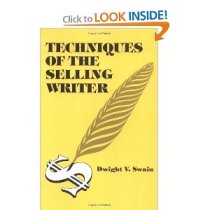
Most writers have heard the terms “scene” and “sequel.” The first time I was exposed to the concept was when I read Dwight Swain’s book TECHNIQUES OF THE SELLING WRITER. They are such an important element in storytelling that I wanted to write a blog post about them, but every time I started, I realized that consolidating all of the important elements of scene and sequel into a short post would be nearly impossible if I were to deal with the mechanics of them in any depth. After all, Swain took an entire chapter to delve into the nuances of scene and sequel – they are that important.
At the most rudimentary level, scene can be explained as “action” and sequel can be explained as “reaction.” Both exist together to drive the action forward and control the pace at which the story unfolds. Scene is about linear events and sequel is about the emotional impact of these events and opens the door to the next scene.
Every scene should be like a microcosm of a story in itself, with your character having a goal, reaching an obstacle, and encountering change as a result. In the sequel, the character has an emotional reaction to the conflict created by having their goal blocked and either overcoming or failing, deals with it and transitions into a new mindset in order to face the next scene.
A scene has three elements:
Goal
Conflict
Disaster
The term disaster is used to describe the new negative state of affairs that must be overcome. Swain calls it a hook that pulls the story forward. The goal in a scene is a short-term, focused goal, small in scope and immediate. The conflict is the obstacle keeping your character from attaining his goal.
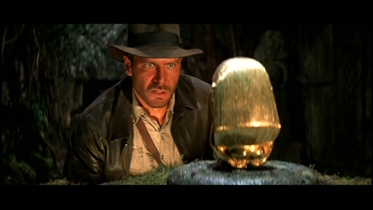
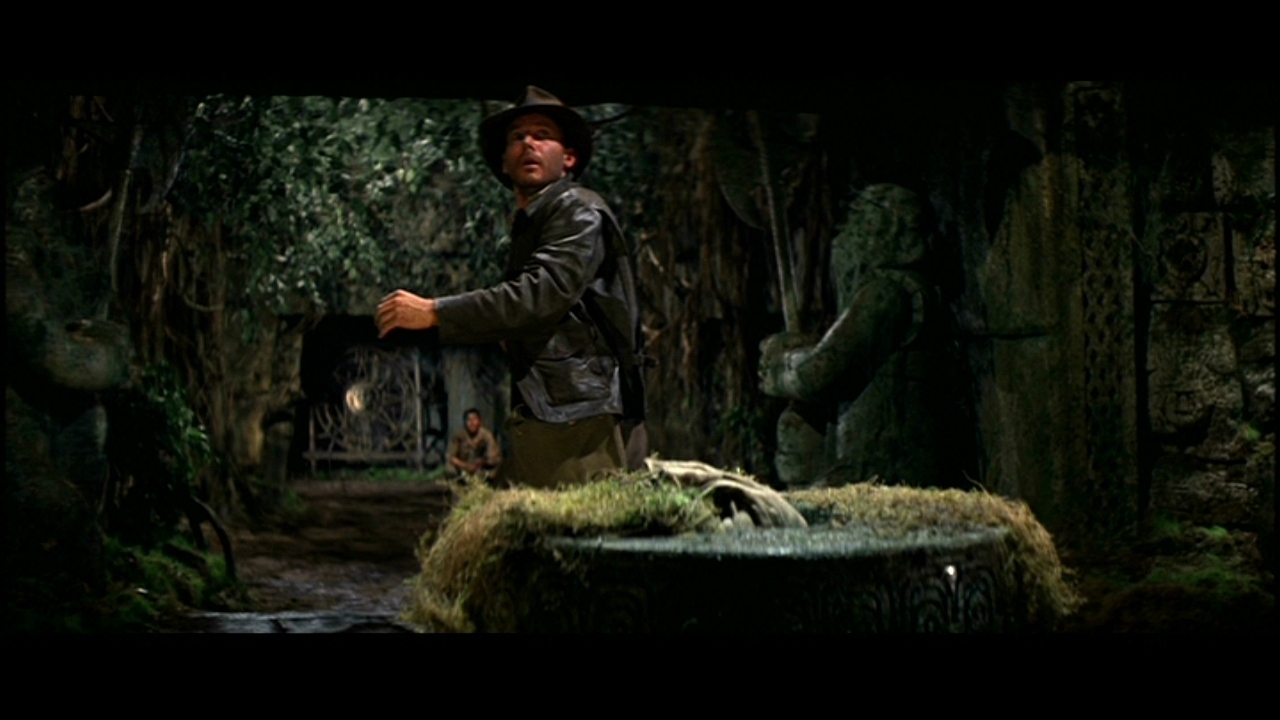
One example of these elements is found in the opening scenes of RAIDERS OF THE LOST ARK. Indiana Jones has reached the golden idol in the temple of the Chachapoyan Warriors. His goal? To take the idol. The obstacle? The pedestal is booby trapped. The disaster? The temple collapses around him.
Enter the sequel. Swain’s three elements of a sequel are:
Reaction
Dilemma
Decision
Reaction: Indy’s smug confidence turns to anxiety as he realizes he’s about to become a permanent part of the site. Dilemma: He doesn’t have the time to carefully negotiate his way back through the booby-trapped floor tiles. The ceiling is falling, setting off the poisoned darts. Decision: He makes a mad dash through and prays he makes it without getting hit by a dart or falling rocks.
Of course, Indy makes it through unscathed, stops and turns, adjusts his hat with a little relieved smile and the wall behind the idol shatters as the giant boulder crashes through. New goal, new conflict, new disaster.
That is an oversimplified explanation of scene and sequel, but you get the idea. Sometimes, it is possible to have several scenes in succession before bringing in the sequel, but the sequel must come into play. The sequel not only lets the character internalize the emotional impact of the action, but it also lets the reader figure out their own emotions as well.
Evoking an emotional response is what good fiction is all about. And that in a nutshell is how scene and sequel work together towards that end.
***
Are you conscious of scene and sequel in your reading and writing? How do you keep track of scene and sequel?




 Gotta Name My Blog