I’m a big fan of TK Toppin’s “To Catch A Marlin” series. I just love the way the author has drawn the characters of Jax Marlin and her copper, Michael Pedroni, and I love how they do their intricate dance in a cat-and-mouse chase.
In Purged in Fire, Jax is up to her old tricks, tracking down a sadistic bad guy at Ring of Fire space station in order to give him some of his own. Pedroni, her ever dogged shadow is hot on her trail, still undecided whether to kiss her, or take her in.
Peppered with sly humor, the dichotomy between Pedroni’s by-the-book life view and Jax’s skewed perspective of right and wrong creates just enough conflict between the two that the reader can accept their unusual relationship. Both characters see their world in absolutes of right and wrong, though Pedroni insists on working within the system, Jax sees the system as part of the problem. While you cheer for them to share more than the occasional kiss, phone call, or flirt, your rational mind knows their relationship can never be, though these two are so obviously perfect for each other.
In true Marlin fashion, the setting is exotic and skillfully woven into the story, Jax and Pedroni spend a certain amount of time distracted by thoughts of the other, and the villain’s comeuppance is gruesome and in keeping with his crimes.
My only complaint with Purged In Fire is that it was far too short. I really enjoy the convoluted twists and turns of Toppin’s longer works. However, Purged In Fire was a fantastic escape and a quick read that I highly recommend.
When my daughter, Amanda, was a tween, she asked for my advice on writing. I was on the road with my job, so I sent her the advice via email. She’s grown now and pursuing her career and off on that wonderful adventure called life. This past weekend, I was going over my old computer files (and pictures from those days, because I miss her) and I came across my advice from the road.
As I read over what I’d sent her, I realized it holds true today for her little brothers and sister as well as it had for her. For what it’s worth, here is a mother’s writing advice:
***
Imagine. Exercise your imagination regularly by playing. Pretend to be someone from a TV show or movie with your friends. If you feel too old for that, shut yourself up in your bedroom and daydream. Wonder what it would be like to be someone else, then pretend you are that person. Wonder what it would be like to do something, then pretend you are doing it. Make up stories in your head and imagine how they would work out.
In your imagination, nothing is impossible. If you wonder what it would be like to have magical powers, then imagine you have them. Go through the day looking for situations in which to use them. How would they work? How would they make problems for you? How would you solve problems with them?
If you wonder what it would be like to live 100 years in the future, then imagine that you do. What would the world be like? How would your life be different? What kinds of problems would you have that you don’t face now? Where would you live? What would the you of the future think of the you of today?
Listento how others tell stories or describe situations in every day conversations. Some of the best writing is just taking what we hear in conversation and transcribing it into something grammatically palatable.
Read. By reading, you will see firsthand how professionals describe ordinary scenes and actions. By emulating them, you can get a feel for the way words flow together. The more you read, the more familiar you will become with language. Read all kinds of books from different decades. See how writing has changed during the 20th century.
Write. The only way to learn to write is to sit down and do it. It doesn’t have to be good the first time. Even professionals must write and revise for hours… days… months… years even, before they are satisfied that they have expressed themselves adequately.
Rewrite movies, TV shows, and books.Write a story using characters and settings from a movie, or any story that captured your imagination. Add yourself as a character and take a course of action that changes the outcome of the story. Take characters from one movie or show and put them in the setting of another.
Experiment with the language. Don’t be afraid to string words together in new and unusual ways. Always be on the lookout for different ways to say the same thing. Instead of saying that someone works at a gas station, he can be a petroleum distribution specialist. A writer is a word merchant. A dog is a canine companion. A cat is a furry sidekick. Your best friend can be your partner in crime. Your mother is your maternal unit. Your father is your paternal unit.
***
This advice from the road still holds some truth. Your imagination is a muscle and you must exercise it regularly to keep it strong.
How do YOU exercise your imagination? What advice would you have for Amanda’s now-tween brother?
Today’s snippet comes from Book Two of The Black Wing Chronicles ~ HERO’S END.
Last week, the Five-Point game with Bo and “Rex” started heating up with an all or nothing bet with Bo’s father’s stasis pod on the line.
***
Bo rubbed the palm of her hand against the weapon’s grip, never taking her eyes off her gruesome opponent. Timing was everything. She couldn’t accept too quickly, or he’d smell a setup. She couldn’t take too long or she’d lose him. Play the mark, not the cards. Royce’s words echoed in her mind. Bo watched Rex, waiting for the tell-tale signal that the timing was right.
His smile widened ever-so-slightly in victory.
There it was.
***
That’s the snippet for the week. Thank you for stopping by. Please take the time to visit the other wonderful authors taking part in Science Fiction/Fantasy Saturday!
Today’s snippet comes from Book Two of The Black Wing Chronicles ~ HERO’S END.
Last week, the Five-Point game with Bo and “Rex” started heating up with an all or nothing bet with Bo’s father’s stasis pod on the line.
***
A wheezing sound that passed for laughter hissed partly from Rex and partly from the mechanics in his motorized chair. The effect was unsettling.
“Very simple, Barron,” he said. “To see my cards, you must place a Capre X2S Mergent Arms blaster on the table.”
Bo’s hand dipped to the handle of the weapon sitting snugly on her hip in its custom quick-draw rig. “You know that’s not the only weapon I’m carrying, right?”
“I would be disappointed in you if it were,” he said. “But the Capre is the only one I’m interested in. That weapon has been passed down from Barron to Barron for centuries.”
***
That’s the snippet for the week. Thank you for stopping by. Please take the time to visit the other wonderful authors taking part in Science Fiction/Fantasy Saturday!
A string of bad relationships leaves our heroine bitter and disillusioned. When her long-time boyfriend reveals their relationship has been a lie and he’s been using her to throw off the private investigators hired by his fiancee’s NOW ex-husband, she does what any reasonable human being would do…she gives up on relationships and throws herself into serial dating.
Meanwhile…
A twenty-two year Navy career has taken its toll on our hero’s marriage. After spending half of his life at sea, our Gulf War vet is ready to settle down to a quiet, suburban, landlocked life as a high school history teacher with his wife and daughter. When an unexpected illness leaves him widowed, he and his teenage daughter are shattered and struggle to find a new normal in their lives.
Months later, his friends decide he’s grieved long enough and doesn’t need to be alone. Knowing their determination to fix him up, he proactively places an ad on Yahoo! Personals, if only to keep from suffering an endless stream of well-intentioned blind dates. He comes across an ad from a fiesty, dark-haired lady with a twinkle in her eyes and a flair for words. Captivated, he messages her.
She agrees to meet him at a book store coffee shop. She warns him that she’s got plans that afternoon and their meeting will be over when her friend arrives. She is as wounded and wary as a doe in hunting season. But our hero, an experienced hunter, recognizes that only a patient, consistent, and honest man will be able to win her trust and eventually, her heart.
Over the next few months, he vies for her attention among the myriad other men she is casually seeing. She makes no secret of the fact that she’s not interested in an exclusive relationship. He doesn’t pressure her, but he gently courts her, becoming the one constant in her life.
Thanksgiving rolls around, the first major holiday since losing his wife. Deciding it’s time to nudge his intended into realizing that she loves him, he angles for an invitation to join her family for dinner, playing on her sympathy and letting drop that if he has nowhere to go, and one of his friends has invited him to join her so she can introduce him to a very nice lady.
His ploy works. Seeing the ease with which he interacts with her family makes her realize how he’s managed to settle so easily into her life. At his heartfelt admission of love, she realizes with some amazement that he’s wormed his way into her heart.
He gives her a month to get used to the idea of being in love, this time with the right man. For Christmas, he gives her an engagement ring.
Of course this sappy romance would have a Valentine’s Day wedding.
And they lived Happily Ever After.
How can I be sure? Easy.
Fast forward ten years, three children and four grandchildren to Valentine’s Day 2013. Our heroine is now a novelist and stay-at-home-mom. Our hero is still teaching high school history. They are more in love with each other than they were ten years ago on the day they married.
On their tenth anniversary, he snuggled up to her, wrapped his arms around her, woke her with a tender kiss and wished her happy anniversary. Then he told her that if she made Valentine’s pancakes, it would make a little boy very happy, but if she wanted to stay in the warm bed and snuggle, it would make a big boy very happy.
Somehow, everyone managed to leave the house happy this morning.
Happy Valentine’s Day everyone. I wish you all the love and contentment that you deserve.
And to my real life hero, Happy Anniversary, my love.
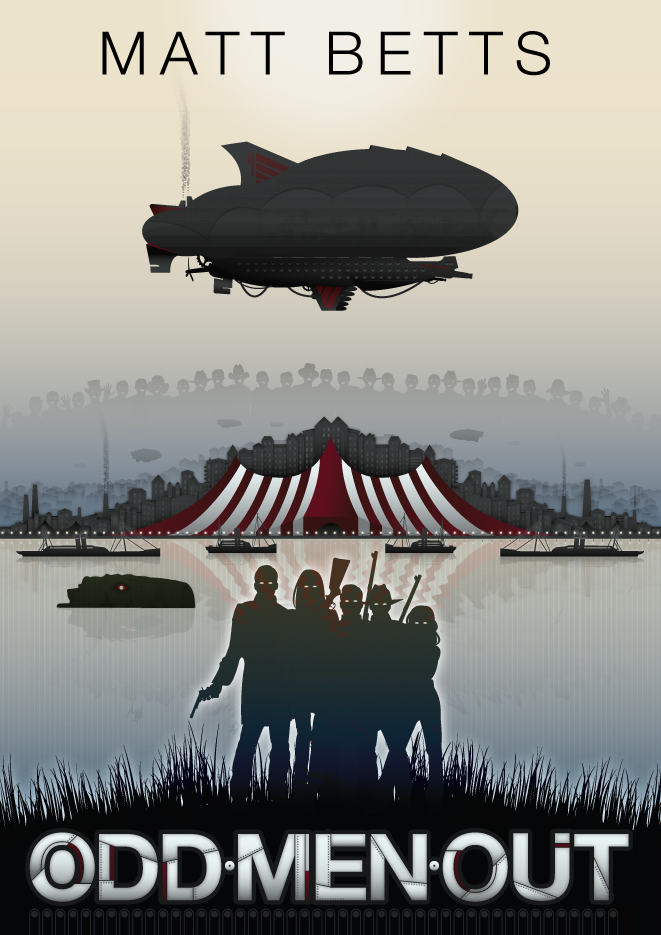
Dog Star Books, the science fiction imprint of Raw Dog Screaming Press, is revealing another cover today. Thanks to managing editor, Heidi Ruby Miller, you can be among the first to see the cover for July 2013 release A ODD MEN OUT, a Steam Punk/Alternative History novel by Matt Betts. This edgy cover is by artist Bradley Sharp.
Coming July 2013
Fighting for survival in a post-Civil War America overrun by zombies, Cyrus and Lucinda join a military group called the Odd Men Out, and together they face a terrorist army from the North in a showdown over a weapon of enormous power.
***
The Civil War went on far longer than anyone expected, prompting the North and South to call a truce to fight their common enemy: The Chewers – dead men come to life to attack the living. As a result, a peacekeeping force called the Office of Military Operations is created to watch over the tenuous peace.
Cyrus Joseph Spencer didn’t fight in the war and couldn’t care less about the United Nations of America that resulted from it. His main concern is making money and protecting his crew from all manner of danger. To escape a horrible tragedy, Cyrus and one of his wards, Lucinda, board a U.N. dirigible for safety. They quickly discover their situation has not improved as the U.N. team is chasing a group of rogue soldiers in hopes of stopping them from obtaining a terrible weapon.
They also have to contend with a larger threat – Drago del Vapore – a giant lizard attacking the West Coast and wreaking havoc on everything it encounters. As the two sides face off against each other and the huge beast, Cyrus feels more and more like an Odd Man Out and finds it harder and harder to stay out of the fight.
Goal – What your character wants Motivation – Why/How badly your character wants it Conflict – What stands between your character and his/her goal
If any of these three elements are weak, your story will be weak as well. It doesn’t matter how beautifully you command the language, or how skillfully you wield action verbs, without a well-defined goal, sufficient motivation, or suitable level of conflict, your story will fall flat and you will lose your reader.
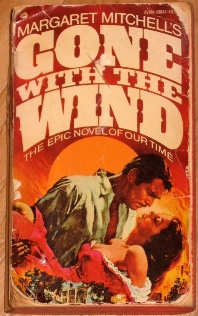
Without a clearly-defined goal, your character will wander aimlessly along, smelling the flowers and wondering what he/she is supposed to be doing. You should be able to answer quickly and concisely what your Main Character (MC) wants. In Gone With The Wind, Scarlett wants Ashley Wilkes. Everything she does springs from this want, from befriending Melanie Hamilton to making her home in Atlanta, it’s all done with the intent to stay close to Ashley Wilkes so she can make him love her.
In The Great Gatsby, Gatsby wants Daisy. In The Sting, Hooker wants revenge for the murder of his friend. In The Princess Bride, Westley wants to claim Buttercup.
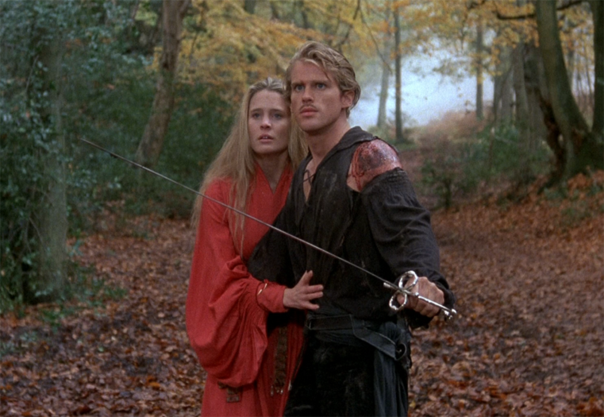
Let’s take a closer look at The Princess Bride. That’s a good one to start with because the characters’ goals are so clearly defined. Westley wants to claim Buttercup. Inigo wants to find the six-fingered man. Humperdink wants to start a war between Guilder and Florin. At some point, their goals come into conflict with one another through the action in the story. Westley and Inigo are pitted against each other because Inigo was hired to kidnap Buttercup and Westley is following them so he can rescue her.
This is where the motivation behind the goals leads to the level of conflict created. In the famous sword fight scene, Inigo’s heart isn’t really in it. Why not? Because Westley isn’t the six-fingered man therefore, he isn’t sufficiently motivated to kill Westley. Westley, however is strongly motivated to defeat Inigo because he stands in the way of rescuing his dearest love, Buttercup. The motivation behind meeting the primary goal is stronger than the motivation behind the secondary goal, so there is conflict. With each clash of one goal blocking another, tension builds.
The story comes to a head when the characters’ primary goals come into conflict, when Westley, in his pursuit of Buttercup, stands in the way of Humperdink realizing his goal of using Buttercup to start a war. This occurs at the climax. Will Westley’s motivation (love) defeat Humperdink’s motivation (greed)? If Westley didn’t have deep feelings for Buttercup, would he fight so hard to rescue her? If Humperdink weren’t so greedy for power, would he be so single-minded in his purpose to use Buttercup to start a war?
This is why motivation is so important. How high are the stakes for your character? What does your character stand to lose? How will it impact his life if he fails? How far is your character willing to go to attain his goals? What will it take to make your character give up on his goals? When you can answer those questions, look at your answers and figure out how to throw each and every answer into your character’s path. That is how you build conflict.
Conflict is having your character face the very real possibility of being thwarted in achieving his goals. Conflict is blocking your character from his goal. All your character has to do to reach safety is cross a bridge. What do you do? You blow up the bridge. Now what does your character do? Well, your character has to find another way across. He learns of a ferry just upriver, but he has to fight his way through hostile natives to get there. If he doesn’t have adequate or believable motivation for continuing forward, the reader will wonder why he bothers. Why doesn’t he simply go home?
You have to communicate to your reader just how important the goal is, how motivated they are to attain that goal, and how difficult the conflict is to overcome. If any of these fall short, your story will lose tension and consequently your reader won’t care.
So, say to your character “Tell me what you want, what you really, really want…”
Today’s snippet comes from Book Two of The Black Wing Chronicles ~ HERO’S END.
Last week, the Five-Point game with Bo and “Rex” started heating up with an all or nothing bet with Bo’s father’s stasis pod on the line.
***
Her lips twitched. “Oh, I have something to offer you, otherwise you wouldn’t have consented to play me. What do you want, Rex?”
“What do you have to offer?”
She shook her head. “You have something in mind,” she said. “I’m not making an offer. What’s the price to see your cards?”
“You are not as innocent as you look.”
“That’s what they said at my trial.”
***
That’s the snippet for the week. Thank you for stopping by. Please take the time to visit the other wonderful authors taking part in Science Fiction/Fantasy Saturday!
As a general rule, I do not read manuscripts from unpublished writers. It’s always a bad idea for writers to do that. No one wants to deal with a plagiarism lawsuit at a future point in time.
The other problem I have with it is that I’m a nice person. I don’t like giving a writer his or her first critique. They hurt. I know, I’ve been there. You’ve spent years writing in secret, stealing time to spin your tales and put them to paper. When you’ve shown them to people, your friends and family have raved over how good you are. English teachers raved over them. You think you’re ready to be published. You’re not.
It’s incredibly rare to find an untrained author who has never had a critique nor studied the craft to come out of the gate with a brilliant masterwork. Sorry. If you’ve never had a critique by an industry professional, your manuscript contains the following problems:
POV shifts within the scene
Passive voice
Telling rather than showing the action
Excessive and unnecessary dialog tags
There are more, but these are the top four and that’s enough to start with. I know this, because I was once a writer taking the first steps from hobby fiction spinner to novelist. When your manuscript hits the slush pile with these no-nos on the first page, you’ll never make it past the reader because he or she will never read past the first few pages. Publishing houses hire readers whose sole job is to sort through the slush pile for these red flags.
POV Shifts Also called “Hopping Heads” it’s the most defended newbie marker. Good prose starts with a POV (Point of View) character who provides the perspective through which the scene is filtered. Nothing can happen out of sight or hearing of this character. Once this character is identified, you cannot jump into another character’s head within the same scene.
“But…but…” I can hear you now. Stop it. You sound like a motorboat.
POV is so important in some genres and sub-genres that it’s become trope. Traditional Gothic Romance is told through the eyes of one character, the heroine, in first person. Hard-boiled detective fiction is also traditionally first person, told from the perspective of the detective. When writing in third person, pick a character and let that character tell the story. If you must add other POV characters, keep them to a minimum. No more than two or three max for longer, more epic stories with complex plot lines. If the action in a scene leaves the presence of your POV character, the scene ends. Break it and start a new scene with a new POV character or rewrite it from the POV of the character who actually follows the action.
A good example of this was THE GREAT GATSBY. Nothing happened outside of Nick’s presence. He was the narrator who observed and participated in Gatsby’s pursuit of Daisy. Anything that happened outside his presence had to be related to him in one manner or another by another character. He observed actions that didn’t make sense to him at the time, but made sense as the story unfolded.
Why is it such a hard and fast rule? Simple. Good fiction evokes emotion in the reader. My nine-year-old son read THE OAK INSIDE THE ACORN by Max Lucado. When he finished, his eyes filled with tears and he threw his arms around me and sobbed. Emotional response. Good prose. One POV.
By hopping heads, you rob your reader of the opportunity to identify with your character within the scene. When you read, you slip into that character’s skin and you experience that character’s world. The reader gets an insight into a personality often unlike their own through the internal monologue and the character’s voice. It’s also jarring to settle into one character’s perspective only to find yourself across the room in another’s.
Passive Voice
Simply put, passive voice uses passive verb forms or “to be” verb forms. “She was singing” as opposed to “She sang.” The “to be” form of the verb separates the reader from the action. The active verb form makes the reader a participant in the action. If you use passive verbs, do it deliberately to serve the telling of the story, for pacing, or to emotionally detach the reader from the action.
That isn’t to say that you can never use am, is, are, was, were. You can. Just make sure when you use them, you’re doing so for a reason and not because you don’t know better. Editors can tell the difference.
This goes hand in hand with
Telling Rather Than Showing The Action
This is trickier to explain. Don’t tell me the character “looked angry” or “was angry” or did anything “angrily.” Show me the emotion. Don’t name it. If you do it right, I’ll recognize the emotion by the character’s action, tone, word use, facial expressions, and body language. Telling me that Donald Duck got angry and yelled isn’t as funny as showing me how Donald sputtered, turned red and jumped up and down, screaming incoherently, with his fists clenched, while gesticulating wildly.
Telling, rather than showing, insulates the reader from the action, events, and emotions in the scene. It has its uses, but should be employed purposefully and sparingly.
Excessive And Unnecessary Dialog Tags
This is such a pet peeve of so many editors of my acquaintance that one has gone so far as to write numerous blog posts on the topic. Just bringing it up will send her off on a diatribe.
Dialog tags are used to identify the speaker. The most common and least distracting is “said.” It’s quite acceptable to name the character and follow it with “said.” When you get creative and follow a question mark with “asked,” or an exclamation point with “exclaimed” or “explained” or “surmised” or any of the myriad others that newbie writers use, you start distracting your reader. It’s self-explanatory that a question was asked or an interjection has been…well…interjected!
If you must get creative, use action to identify your speaker rather than increasingly pompous dialog tags.
Caroline lifted the calling card from the tray. Her eyes narrowed as she studied the curlicues swirling across the white paper. Her lips tightened. How dare he?
“Mother, Charles has come to beg forgiveness for his behavior last night.”
Her mother didn’t look up from her needlework. “Shall I refuse him?”
Today’s snippet comes from Book Two of The Black Wing Chronicles ~ HERO’S END.
The game between Bo and “Rex” is heating up.
***
His cracked and lipless mouth curved in a travesty of a smile. “Let’s dispense with the pretense that you’re here because of my winning personality.”
With a thump, Bo let her chair fall forward back onto all four legs. “Fine. Let’s.”
“One last wager — all or nothing on this hand,” he practically purred.
It was no secret that Rex cheated. Bo knew that he had a perfect Five-Point in his hand. It was the only thing that would beat her. She leaned forward bracing her elbows on her knees.
***
That’s the snippet for the week. Thank you for stopping by. Please take the time to visit the other wonderful authors taking part in Science Fiction/Fantasy Saturday!

 Purged In Fire by T.K. Toppin



 Gotta Name My Blog