Saturday Snippet: Research? Riiiiight.

Welcome to Science Fiction Fantasy Saturday. Snippets of ten sentences or less are yours for the reading!

Today’s snippet comes from Book Two of The Black Wing Chronicles ~ and a short story DEATH OF A HOLOFEATURE HERO.

This is a life-altering gunfight for Blade, and it takes place in a theater. Hell of an audition, right?

***

“You’re not going in there!” She cried, throwing her arms around his neck again.

Swallowing his annoyance, he pried her loose. “Don’t worry about me,” he said with a grin, slipping easily into the holofeature hero role he’d played ever since he walked away from his Inner Circle career five years earlier. “I’m just going to take a look in the door and see if I can help anyone else get out before the authorities get here. I’m not a hero, I only play one in holofeatures.”

He shrugged her off. Now wasn’t really the time.

“Call it research for my next role.” He nudged her towards the security office. “Go get help.”

***

That’s the snippet for the week. Thank you for stopping by. Please take the time to visit the other wonderful authors taking part in Science Fiction/Fantasy Saturday!

NEW RELEASE: “To Catch A Marlin” By TK Toppin

Don’t you just love the cover?

I don’t make it a practice to hawk new releases without a review, but I can’t wait to finish writing the review before I tell you the exciting news about TK Toppin’s latest release TO CATCH A MARLIN that hit the stands today.

I was fortunate enough to beta read this book for the author, and even in its rough drafts it captured my imagination in a way that…well, let’s just say I have been counting the minutes until I could order this completed, polished novel for my very own! I really believe this is the author’s best work yet!

It’s a lighthearted adventure with parts that will make you laugh out loud and other parts will keep you turning the pages well into the wee hours of the night. I just bought my copy for my Kindle. I’ll be purchasing the paperback as well. This is one book I want for my permanent library. Keep an eye on this page for the review, hopefully next week. I can guarantee 5 Stars.

Congratulations to TK Toppin on her newest release and best of luck.

***

In the tail end of the 24th Century, Special Inspector Michael Pedroni pursues a beautiful and elusive vigilante, Jax Marlin, in a wild cat and mouse chase that will take him from Earth to the Bacchus Dome and beyond.

Jax Marlin is not your average criminal; she seeks out evil-doers and law-breakers, doling out justice in whatever way she sees fit. But lately, she finds she’s been gift-wrapping criminals specially for her favorite copper.

Four of the world’s leading criminals are determined to form an alliance. Jax is determined to stop them. Hot on her heels, Inspector Pedroni finds himself questioning the difference, if any, between her justice and his. More than that, he wonders why, when he’d had her in his grasp, he was unable to slap on the restraints and bring her in.

Both want the same thing–to stop criminals. But the growing attraction each has toward the other becomes a dangerous hindrance.

***

Pick up your copy of TO CATCH A MARLIN here

You Too Can Write A Novel

The buzz for NaNoWriMo (National Novel Writing Month) is in full swing on the writer’s blogs and chat groups.  I’m torn about participating this year. I probably will not because Book Two of The Black Wing Chronicles is in its second draft now and I really won’t have the time to crank out 50k words for fresh novel.

It’s a little-known fact that SOVRAN’S PAWN was a pinch-hit NaNo Novel. Two family crises in succession took the wind out of my sails for the Southern Humor story I was working on, so I replaced it with a the back story for my REAL novel, a space opera adventure on which I’d written nearly as many words. By the end of the month, I had the first draft for what would become SOVRAN’S PAWN, a novel I never intended to write. I mentioned the project in my personal blog that has pretty much sat disused since SOVRAN’S PAWN was released this past spring.

http://caliscomfycouch.blogspot.com/2011/10/around-writing-world-in-30-days.html

http://caliscomfycouch.blogspot.com/2011/11/no-go-on-nano.html

I considered the substitution cheating, but my NaNo buddies encouraged me to count it as a win since word counts had been comparable and I’d finished the first draft of the novel in the process.

NaNoWriMo is a wonderful exercise for writers and wannabes. I strongly encourage anyone who has entertained the idea of writing a novel to give it a try. The discipline needed to simply sit down and write to a goal, with no self-editing is an invaluable experience. So many writers get into the habit of not finishing things because they don’t finish a first draft, but continually revise and edit.

I learned several important things from my NaNo experience last year:

  • The first draft is a free-for-all death match between writer and self-editor. Anything, no matter how patently ridiculous, should be allowed in the first draft.
  • Daily word goals are important if you hope to make forward progress on a project.
  • It’s vital to be accountable to someone for your progress on your writing.
  • Don’t spend a lot of time rereading what you’ve written until the end of the first draft. It’s not supposed to be perfect. It’s supposed to tell a story.
  • It’s important to do as much advance planning and story mapping as possible before writing the first words on your first draft.
  • The outline is a suggestion, a guide to keep you from wandering too far into the wilderness, and it’s okay to stray a little if you discover something interesting.
  • Writers MAKE time to write, they don’t fiddle around wishing it would appear.

So if you’re planning on participating in NaNoWriMo this year, here are some links I’ve found helpful:

http://www.languageisavirus.com/nanowrimo/word-meter.html

http://nicolehumphrey.net/backwards-nanowrimo-the-reward-system/

And, of course, here it is again:
http://www.nanowrimo.org/

From Frying Pan to Fire: Scene and Sequel

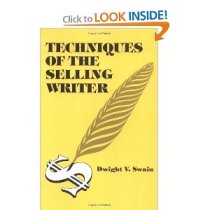
Most writers have heard the terms “scene” and “sequel.” The first time I was exposed to the concept was when I read Dwight Swain’s book TECHNIQUES OF THE SELLING WRITER. They are such an important element in storytelling that I wanted to write a blog post about them, but every time I started, I realized that consolidating all of the important elements of scene and sequel into a short post would be nearly impossible if I were to deal with the mechanics of them in any depth. After all, Swain took an entire chapter to delve into the nuances of scene and sequel – they are that important.

At the most rudimentary level, scene can be explained as “action” and sequel can be explained as “reaction.” Both exist together to drive the action forward and control the pace at which the story unfolds. Scene is about linear events and sequel is about the emotional impact of these events and opens the door to the next scene.

Every scene should be like a microcosm of a story in itself, with your character having a goal, reaching an obstacle, and encountering change as a result. In the sequel, the character has an emotional reaction to the conflict created by having their goal blocked and either overcoming or failing, deals with it and transitions into a new mindset in order to face the next scene.

A scene has three elements:

  1. Goal
  2. Conflict
  3. Disaster

The term disaster is used to describe the new negative state of affairs that must be overcome. Swain calls it a hook that pulls the story forward. The goal in a scene is a short-term, focused goal, small in scope and immediate. The conflict is the obstacle keeping your character from attaining his goal.

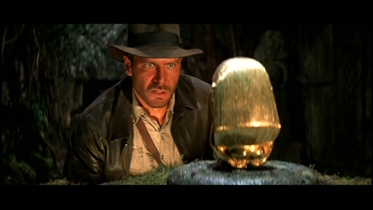
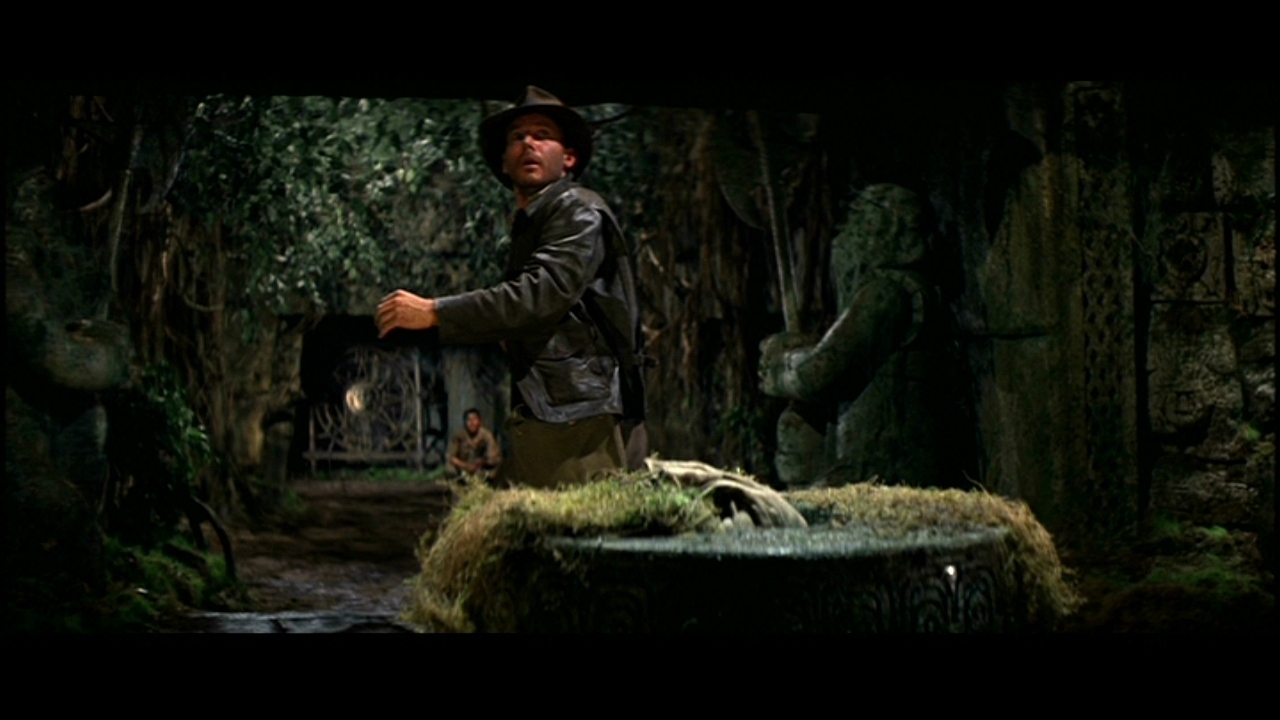
One example of these elements is found in the opening scenes of RAIDERS OF THE LOST ARK. Indiana Jones has reached the golden idol in the temple of the Chachapoyan Warriors. His goal? To take the idol. The obstacle? The pedestal is booby trapped. The disaster? The temple collapses around him.

Enter the sequel. Swain’s three elements of a sequel are:

  1. Reaction
  2. Dilemma
  3. Decision

Reaction: Indy’s smug confidence turns to anxiety as he realizes he’s about to become a permanent part of the site. Dilemma: He doesn’t have the time to carefully negotiate his way back through the booby-trapped floor tiles. The ceiling is falling, setting off the poisoned darts. Decision: He makes a mad dash through and prays he makes it without getting hit by a dart or falling rocks.

Of course, Indy makes it through unscathed, stops and turns, adjusts his hat with a little relieved smile and the wall behind the idol shatters as the giant boulder crashes through. New goal, new conflict, new disaster.

That is an oversimplified explanation of scene and sequel, but you get the idea. Sometimes, it is possible to have several scenes in succession before bringing in the sequel, but the sequel must come into play. The sequel not only lets the character internalize the emotional impact of the action, but it also lets the reader figure out their own emotions as well.

Evoking an emotional response is what good fiction is all about. And that in a nutshell is how scene and sequel work together towards that end.

***

Are you conscious of scene and sequel in your reading and writing? How do you keep track of scene and sequel?

Saturday Snippet: Gunfire and Hysterics

Welcome to Science Fiction Fantasy Saturday. Snippets of ten sentences or less are yours for the reading!

Today’s snippet comes from Book Two of The Black Wing Chronicles ~ But it may find release as a short story called DEATH OF A HOLOFEATURE HERO.

This week’s snippet comes from a scene that is one of the oldest parts of my story canon. The idea for this scene dates back to 1984. Though it had been referenced many times over the years, it had never even been written until NOW!!

This is the scene in which Blade Devon finds himself involved in a gunfight theater, and if he makes it through the audition, it could change his life forever.

***

She threw her arms around his neck and sobbed into his shoulder.

“Oh Blade! Thank the Maker it’s you!”

“Nyla, what’s going on?”

“We were getting set up for auditions and these men came in! They had guns! Real guns!”

He cast a speculative eye towards the open theater door. A tiny spark of hope flickered to life. After weeks of compliance and submission, going through the motions of tying up the loose ends of his life in holofeatures, this could be the break he’d been waiting for. Men with guns often had means of getting off-planet quickly. If he played this scene right, he might be able to make his escape once and for all.

***

That’s the snippet for the week. Thank you for stopping by. Please take the time to visit the other wonderful authors taking part in Science Fiction/Fantasy Saturday!

You Want to Bury Your Mother Where?

While in one of my ongoing daily conversations with my friend/editor/confidante Laurel Kriegler, she accused me of being a pot-stirrer. Never mind why. It really isn’t relevant. I confessed that I have been accused of such. My husband (also a pot-stirrer) lovingly refers to me as a troublemaker. I don’t mind.

Age and experience have taught me that there is a certain amount of trouble that any given person will be exposed to within the course of the day. You can either sit back and let it find you, or you can be causing it for someone else. I get into more trouble just sitting at home, minding my own business, knitting and letting trouble find me.

For example, when I was expecting my third child, the doctor put me on bed rest halfway through the pregnancy. Obediently, I sat quietly, doing nothing more strenuous than knitting baby clothes and watching chick flicks, like Legally Blonde and Father of the Bride. I didn’t even get on the computer or take part in social media at the time.

One morning, while I was working on the cutest little cable knit cardigan in mint green, my telephone rang. (This is trouble’s favorite way of finding you. This is why I never answer my phone anymore. I screen all my calls now, especially during working hours.) The older woman on the other end introduced herself as if I should know her. I did not. She explained that her mother was the daughter of the doctor who had originally built the home in which I live.

“How nice,” I said. I made all the appropriate polite noises one makes to strangers who call you up out of the blue to tell you such things.

The woman went on to say that her mother had just passed away a few days earlier. Again, I made the appropriate polite noises expressing condolence. (I’m Southern. It’s how we do things. A Southerner would rather be thought stupid than rude, so we’re painfully polite.) All the while I wondered to myself why this stranger was calling me, of all people, with this information. We are not originally from the area and have no ties to the families here.

“My mother grew up in the Sanchez House,” she said.

Okaaay. I’m guessing that’s a given, considering she was the daughter of the original owner and it remained in the family for ninety-odd years.

“She always talked about how much she loved the place,” she went on. “She especially loved the rose garden.”

The only rose garden on the property is the one I planted when we moved here. The old doctor had been camellia happy and planted every variety known to human kind, but no roses. Again, out of deference to her grief and recent loss, I made more appropriately polite noises, but didn’t correct her.

She went on to say that, despite the fact she hadn’t lived there in more than sixty years, she wanted to bury her mother in my rose garden, up against the house, just outside my children’s bedroom window.

I was too stunned to come up with any appropriate polite noises for that request. I’m not sure there are any appropriate polite noises for that. The most surreal part of this request was that she seemed to be taking it as a given that I would naturally not only accept, but be thrilled to oblige. Not quite knowing how to respond to this kind of…gall? …cheek? …insanity? …presumption? I managed to stammer something diplomatic, vague, and of course polite.

The funeral was to be that weekend. There would be the usual number of mourners for a pillar of the community in the Old South, which translates to at least a hundred nodding, pinch-faced, elderly folks, with their cataract-clouded eyes staring disapprovingly through their bifocals at the younger generation, dressed inappropriately for the occasion, and taking stock of who has gone on to Glory and who has managed to hold on out of sheer cussedness.

I explained that I was on bed rest under doctor’s orders and would be unable to host her family’s funerary request. I was not able to cook and clean and otherwise provide entertainment for the funeral and wake.

She made disapproving noises over my bad manners. She huffily explained that the funeral would be held at the church and the interment was to be in my rose garden and I shouldn’t be inconvenienced in any way. Her tone spoke volumes about her inability to understand why I was being so difficult about it all. After all, her mother had lived there first and she said as much.

Now, the house had been sold twice since leaving the family’s hands. Both times, it stayed on the market for a year or more before it sold. If the property was so darn important to the family, they’d had ample opportunity to buy it back. No, this wasn’t a reasonable request by anyone’s accounting except the crazy lady with the dead mother she wanted  bury under my sons’ bedroom window.

Realizing I wasn’t dealing with a rational request, I made soothing noises, because that’s what one does with crazy people. I took her phone number and told her I would have to check on the legality of her request and get back to her. Surely there were zoning laws and Health Department regulations prohibiting the random burial of human remains in populated areas.

Of course not! This is rural south Georgia, for crying out loud! Neither the city nor the county nor the Health Department had laws or regulations prohibiting such. In fact, I don’t think anyone but me saw this as anything but a rollicking good idea! However, the nice man at the Health Department told me that I needed to notify the neighbors prior to the interment, and if any of them expressed an objection, they could stop the burial that way. Knowing my neighbors and their fawning love for the family, I doubted that would happen.

Fortunately, I managed to convince one neighbor to object.

Relieved, I called the crazy lady with the bad news. I made more soothing, polite noises. She insisted on knowing the name of the neighbor who objected so she could call them and bully them into compliance. I refused to give her that information. I informed her politely that I had considered her request, I had looked into it and the answer was no. I did tell her that she’d had opportunity to purchase the home when it had been up for sale the two years prior and if she had, she could have buried her entire family on the property. But it was no longer owned by the family, and using the front yard as a family cemetery was not a possibility.

After that, I decided I’d never wait for trouble to find me again. Since then, I’ve been very proactive about it all.

Better to be the one stirring the pot than the one dealing with crazy people who want to bury their mama in your rose garden.


Much thanks to Stephen Ormsby for such a great interview! The same week as Ben Bova! I’m in good company!

Stephen C. Ormsby's avatarStephen C. Ormsby

I met JC through Facebook and quickly we found we had similar senses of humour.  It became quickly apparent to both of us that we both rather dry.  That really means that only she laughwed at my stuff and I laughed at her stuff!

So, on to JC herself.  She writes science fiction with a hint of romance in it.  So far, they have been very succesful.  Currently, she is working on three other books (at once).  I have borrowed this from her blog.

he traces her lifelong infatuation with SF/Adventure to growing up in West Central Florida during NASA’s most exciting years, often watching space launches from her back yard.

JC got her start as a stringer for the Tampa Tribune in 1991.  Since that time, she has been a member of the RWA, TARA, TWA and PINAWOR, and is currently a member of Pennwriters and the Science Fiction…

View original post 2,181 more words

Two Sentences That Changed My Life

When I was a very young and inexperienced writer, the best advice I got from published authors of my acquaintance was to pick up a copy of Dwight Swain’s book, TECHNIQUES OF THE SELLING WRITER. Yes, this book has been around that long. Actually, this book has been around longer than I have. Before I had a chance to snag a copy from my local bookseller, I received a copy from my Great-Aunt Gladys, who was also a bit of an angel, encouraging my literary aspirations from the time I was two-years-old.

I consumed the book. I devoured it. I internalized it. I made its advice part of my subconscious. I refer to it frequently. My ancient copy is bright yellow, which makes it easy to spot on a crowded bookshelf from far across the room.

The power of two sentences changed my life as a writer.

One of the most difficult tasks for novelists is to condense their story down to less two hundred words. When someone asks you what your story is about, the temptation is to give all the backstory, the world-building and the details you painstakingly created. Nobody wants that. They want to know what the story is about.

Swain said that the heart of your story contains five elements, which can be reduced to two sentences: one a statement, the other a question.

  • Character
  • Situation
  • Objective
  • Opponent
  • Disaster

I’ve found that keeping this in mind when creating my own story summary helps immensely. When someone asks me what SOVRAN’S PAWN is about, I tell them –

When convicted traitor Bo Barron’s father is kidnapped, she has to go under cover on an interstellar cruise liner at a gambling tournament to steal plans for an illegal weapon that are being auctioned off to meet the ransom demand. An attempt on her life by a mysterious methane breather, and the timely intervention of a handsome Inner Circle agent leave Bo wondering whether there is a weapon at all and will she survive the cruise long enough to rescue her father?

That’s a seventy thousand word book condensed into eighty-two words.

  • Character – Convicted traitor Bo Barron
  • Situation – father is kidnapped
  • Objective – (There is a dual objective here) Stealing the plans, but also recovering her father
  • Opponent – Mysterious methane breather (stated) Kidnappers (implied)
  • Disaster – getting herself killed, or losing her father

You know, if I were brutal about it, I could trim it even more.

Let’s take a story you’re probably more familiar with, like STAR WARS (ANH)

When Luke Skywalker learns he’s in possession of stolen plans, he joins forces with Jedi Knight Obi-Wan Kenobi to turn them over to the Rebellion. But can he rescue the princess and keep the plans out of the hands of Darth Vader, who is determined to destroy the Jedi and recover the plans no matter the cost?

Or this movie?

During WWII, American ex-pat Rick Blaine finds himself in possession of stolen letters of transit and no easy way to rid himself of them. When the Nazi occupying force, an underground leader, and Rick’s ex-girlfriend all conspire to recover the letters, who will get the letters and who will end up dead or in a concentration camp?

See? Easy-peasy, lemon-squeezy.

Pick a favorite book or movie…any story really, and try it! Let me know how it works for you!

Saturday Snippet: Wooden Damsel in Distress

Welcome to Science Fiction Fantasy Saturday. Snippets of ten sentences or less are yours for the reading!

Today’s snippet comes from Book Two of The Black Wing Chronicles ~ Taking a week off from title worries.

This week’s snippet comes from a scene that is one of the oldest parts of my story canon. The idea for this scene dates back to 1984. Though it had been referenced many times over the years, it had never even been written until NOW!!

This is the scene in which Blade Devon leaves the perks of his Inner Circle affiliation and his holofeature career for the seedy galactic underbelly of the Sub-socia. A gunfight at an audition in a theater on the studio lot provides Blade just the right opportunity to change careers and escape the IC security detail sent not only to protect him from attempts on his life, but to drag him kicking and screaming back to a desk job on Trisdos at the end of a month’s time.

***

Blade switched off the engine and dismounted the cycle then reached for the straps holding his helmet in place. As he pulled it off, he heard the faint sounds of a commotion from the theater as one of the emergency doors flew open. Blade’s head snapped around. A young actress, burst through, running as if the terrors of hell chased her.

Nyla Losh was too beautiful to be real — which was a good indication that her beauty was surgically enhanced — but she had all of three expressions and a completely monotone line delivery. She was only marginally better in bed. The only reason his affair with her had lasted through principal shooting of the one holofeature they’d made together had been because the producer begged him not to end it until they’d wrapped. It had been the only way to make their onscreen love scenes believable.

***

That’s the snippet for the week. Thank you for stopping by. Please take the time to visit the other wonderful authors taking part in Science Fiction/Fantasy Saturday!

Meaty Middle With a Side of Rocks

I love interacting with other writers on the internet.

One Facebook group I belong to has been particularly helpful. Comprised primarily of mystery authors and members of Pennwriters, I find the insight of my partners-in-crime at How Many Pages Did You Write Today invaluable; particularly when it comes to the nuts and bolts of story structure. When I was slogging through SOVRAN’S PAWN, I posted a whiny complaint about my story and how much I hated this part.

“You must be at the meaty middle,” one author chimed in.

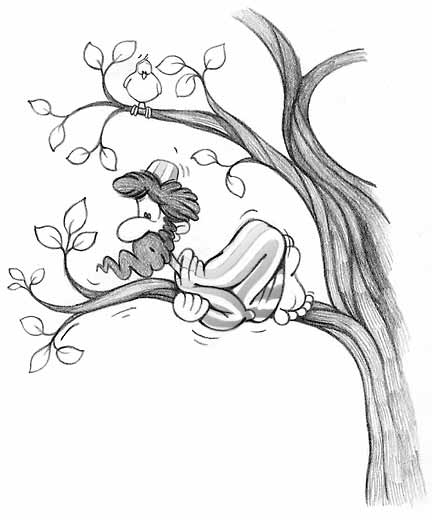
I was indeed. The second act of the three-act structure is often referred to as the meaty middle. The three-act structure is described as “the first act you send your character up the tree, the second act you throw rocks at him to make him climb higher and further out on that precarious limb and the third act is the payoff.”

Sounds easy, right? You try it sometime. It sounds easier than it is.

The rocks you throw at your protagonist need to drive the action forward and force the character into growth and change. All of this has to be done in such a way as to entertain your reader and not come across as contrived. Make your protagonist as miserable as possible. Make your protagonist suffer in such a manner that the climax and resolution are inescapable.

Again, sounds easier than it is.

It wasn’t until mystery author Kaye George reminded me of a little nugget I had forgotten. Your first and third act, you plot from your protagonist’s point of view. The second act, you plot from your antagonist’s point of view, then write it from your protagonist’s point of view.

Sounds complicated? Not really. If you think about it, who is throwing the figurative rocks at your protagonist? The antagonist. Who is calling all the shots, pushing your protagonist towards the inevitable showdown in the climax? Why, the antagonist, of course!

Wait a minute? Acts? I thought you were talking books, not plays! Well, yes. But the story structure does apply to both novels and plays. The first act establishes your character’s sense of normal and ends with the inciting incident that pushes your protagonist up the proverbial tree. The second act exists purely for the torture of the protagonist as he/she tries to decide a course of action. There is a major, mid-point plot reversal. You think things are finally going to work out for your protagonist, but something happens that lands him/her in deeper water than when they started. The rocks you throw continue to get bigger and bigger until your protagonist is clinging to the last bit of hope. Act three begins with the decision. The protagonist chooses and makes a sacrifice of some sort. There is a dark moment when it looks like they’ve chosen wrong. That’s when the author rewards or punishes the character for being so entertaining. In the end of the final act, a new normal is established for your protagonist.

But there is that pesky second act to deal with. The first and third are easy. Set ‘em up and watch ‘em fall. The second act is all that fun stuff in between during which your protagonist deals with the situation, makes sense of it, rails against it and finally snaps and gets proactive, rather than continuing to be reactive.

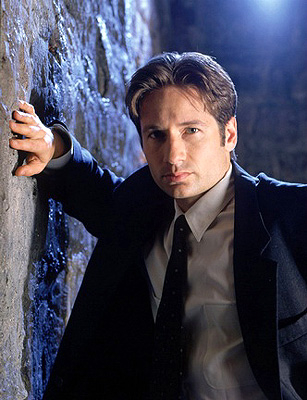
Fox Mulder, The X-Files

For me, I get so caught up in my protagonist, that I forget my antagonist. It’s a major flaw in my story crafting. After all, what would Sherlock Holmes be without Professor Moriarty? Superman without Lex Luthor? Fox Mulder without the Cigarette Smoking Man?

Yeah, I’m reaching. It’s late and I’m tired. Cut me some slack.

No. That’s the one thing you must never do to your protagonist! Push harder! Your antagonist wouldn’t sit back and let your protagonist call a time out! Pushing at this point makes your protagonist brilliant. He/she has to be. That, in turn will make a story shine.

The next time you sit down to read a book or watch an episode of Doctor Who, try breaking up the story into its basic three-act structure. Where is the inciting incident? Where is the mid-point plot reversal? Where is the decision? The dark moment of doubt? Where is the payoff? Has the second act been plotted from the antagonist’s point of view?

Tell me, what have you discovered?